
What's Happening?
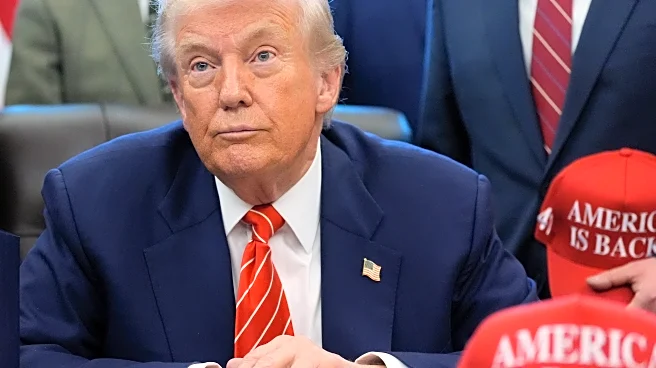
During a speech at the Davos economic forum, President Trump reiterated his controversial interest in acquiring Greenland, a move that has previously strained relations with European allies. The speech,
which began with a warm reception, took a darker turn as Trump announced his intention to negotiate for the 'full title' of Greenland, describing it as a strategic asset for the United States. He emphasized that the acquisition would be peaceful, aiming to build what he called the 'greatest Golden Dome ever built.' Trump's comments have been met with mixed reactions, particularly as he criticized European nations, suggesting that without U.S. intervention, they would be speaking German. The speech highlighted ongoing tensions between the U.S. and its European allies, exacerbated by Trump's previous social media posts on the matter.
Why It's Important?
The proposal to acquire Greenland has significant geopolitical implications, potentially affecting U.S. relations with NATO allies and the European Union. Greenland, an autonomous territory of Denmark, holds strategic military and economic value due to its location and natural resources. Trump's insistence on acquiring Greenland could lead to diplomatic rifts, as European leaders have expressed strong opposition to the idea. The move could also impact NATO's cohesion, as Greenland's strategic position is crucial for transatlantic defense. Domestically, the proposal may face resistance from Congress, with key figures expressing skepticism about the feasibility and necessity of such an acquisition.
What's Next?
The international community will closely watch the U.S. administration's next steps regarding Greenland. European leaders are likely to discuss the implications of Trump's proposal at upcoming EU meetings, potentially leading to diplomatic negotiations or statements of opposition. In the U.S., Congress may hold hearings or issue statements to clarify the government's position and assess the potential impact on foreign relations. The situation could also influence upcoming elections, as candidates may use the issue to critique or support Trump's foreign policy approach.