







What's Happening?
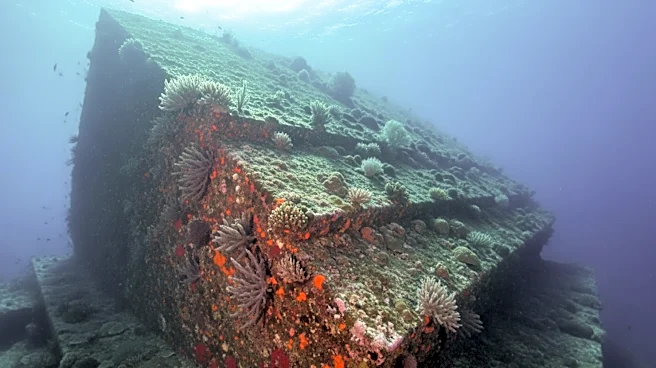
The Yonaguni Monument, an underwater structure off the coast of Japan, continues to spark debate among scientists and researchers. Discovered in 1986 by dive operator Kihachiro Aratake, the monument features massive stone terraces and platforms with sharp,
straight edges. Marine geologist Masaaki Kimura argues that the structure is a remnant of an ancient civilization, possibly linked to the legendary lost continent of Mu. However, skeptics like Boston University professor Robert Schoch contend that the formation is a natural result of tectonic activity and erosion. Despite extensive exploration, no definitive evidence of human construction has been found.
Why It's Important?
The Yonaguni Monument represents a significant point of contention in the fields of archaeology and geology. If proven to be man-made, it could redefine our understanding of early human civilizations in East Asia, potentially predating known sites like Göbekli Tepe. The debate also highlights the challenges of interpreting underwater archaeological sites, where natural processes can mimic human design. The monument's allure has boosted local tourism, drawing divers and researchers alike, but the lack of concrete evidence continues to fuel speculation and controversy.
Beyond the Headlines
The ongoing debate over the Yonaguni Monument raises broader questions about the interpretation of archaeological evidence and the influence of speculative theories on scientific discourse. The site's connection to the myth of Mu illustrates how cultural narratives can shape perceptions of historical evidence. The monument also underscores the importance of interdisciplinary research in resolving complex questions about human history and natural phenomena. As interest in the site grows, it may prompt further exploration and technological advancements in underwater archaeology.