




What's Happening?
Kristina Douglass, an archaeologist and associate professor at Columbia University’s Climate School, emphasizes the importance of studying trash to understand past human adaptation to climate change. Douglass, a 2025 MacArthur Fellow, leads the Ola Be
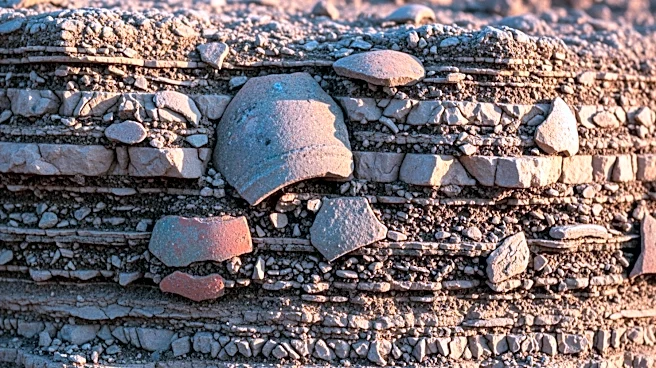
Taloha Lab, which focuses on how past human societies co-evolved with their environments, particularly in Madagascar. Her research suggests that the materials people unconsciously leave behind, such as broken tools and food scraps, provide a democratic view of historical life, offering insights into everyday life rather than just the lives of elites. Douglass argues that this archaeological perspective can inform current strategies to support communities facing climate instability, especially those in vulnerable coastal areas.
Why It's Important?
Douglass' work underscores the potential of archaeological findings to inform modern climate adaptation strategies. By understanding how past societies adapted to environmental changes, current communities, particularly indigenous and local populations, can develop more effective responses to climate challenges. These communities, often excluded from policy discussions, possess valuable generational knowledge about sustainable living. Douglass advocates for integrating this cultural knowledge into policy-making to address the rapid and intensified climate changes driven by industrialization and overconsumption. Her approach highlights the need for inclusive decision-making processes that consider the insights of those most affected by climate change.