


What's Happening?
Despite its designation as a 'supervolcano,' a catastrophic eruption at Yellowstone National Park is highly unlikely to occur in the foreseeable future, according to scientists. Editors Sarah Durn and Annie Colbert of Popular Science discussed the probability
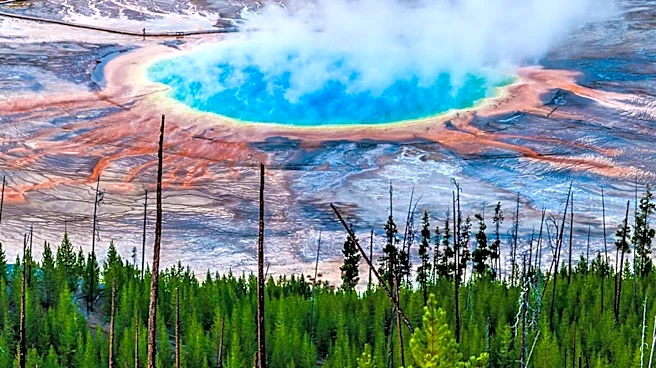
of such an event, noting that the last major Yellowstone eruption happened approximately 631,000 years ago. Experts indicate that the magma beneath Yellowstone is currently mostly solid, meaning it lacks the liquid volume necessary to fuel a massive supervolcano eruption. While the park is an active volcanic system, with recent events including a 19-mile-wide bulge forming along the northern caldera and a hydrothermal explosion at Biscuit Basin, these activities are not indicative of an impending super-eruption. Scientists monitor Yellowstone continuously using seismic stations and instruments that track heat output, and they anticipate weeks to months of warning signs if a major eruption were to become imminent.
Why It's Important?
The clarification regarding Yellowstone's volcanic activity is crucial for public understanding and national park management. The term 'supervolcano' often evokes images of immediate, apocalyptic destruction, leading to unnecessary public anxiety and potentially impacting tourism. By emphasizing the low probability of a catastrophic eruption, scientists aim to provide accurate information and manage expectations. This understanding allows for continued enjoyment of Yellowstone National Park's unique geothermal features, which are a direct result of the underlying volcanic activity. Furthermore, it highlights the importance of ongoing scientific monitoring and research in mitigating potential risks and informing emergency preparedness, even for highly improbable events. The distinction between a 'super-eruption' and more common, smaller-scale volcanic events like hydrothermal explosions or lava flows is vital for a nuanced public discourse on geological hazards.
What's Next?
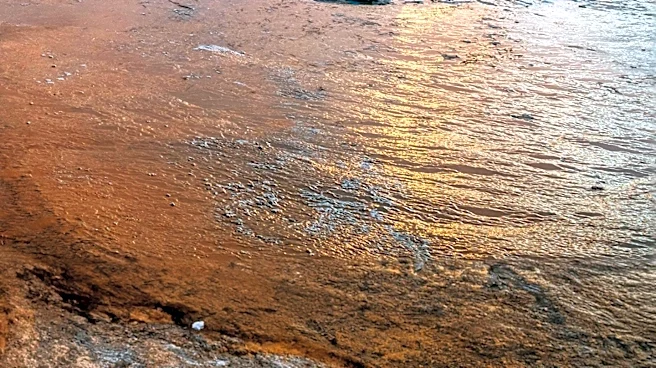
Scientists will continue their rigorous monitoring of Yellowstone National Park's volcanic system. The Yellowstone Volcano Observatory employs seismic stations to track earthquakes and instruments to monitor heat emanating from the system, ensuring that any significant changes are detected promptly. While a super-eruption is not expected, smaller, more frequent events like hydrothermal explosions and lava flows are considered much more likely. These events, though localized, can still pose hazards and lead to landscape changes, as evidenced by the recent formation of a new boiling water pool at Biscuit Basin. Public education efforts, such as those by Popular Science, will remain important in communicating the actual risks and dispelling misconceptions about Yellowstone's volcanic potential, encouraging visitors to respect the park's active geological environment without undue fear.
Beyond the Headlines
The public perception of Yellowstone as a ticking 'supervolcano' time bomb often overshadows the complex and dynamic nature of geological processes. This narrative, fueled by popular culture and sensationalized media, can create a disconnect between scientific understanding and public anxiety. The scientific community's efforts to clarify the low probability of a catastrophic eruption underscore the broader challenge of communicating scientific consensus on low-frequency, high-impact events. It also highlights the ethical responsibility of media to accurately represent scientific findings. Beyond the immediate geological concerns, Yellowstone's status as a 'supervolcano' serves as a powerful reminder of Earth's immense natural forces and the continuous, albeit often slow, geological evolution of our planet, influencing ecological systems and shaping landscapes over millennia.