





What's Happening?
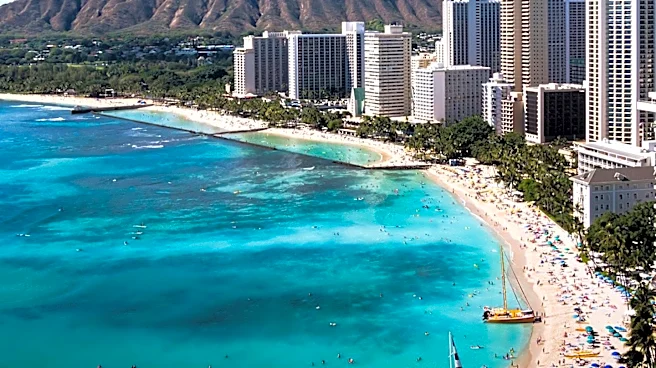
Honolulu is experiencing a significant surge in tourism, with hotel occupancy rates reaching near historic highs and major convention centers fully booked. Data from the Hawaii Tourism Authority indicates a continuous increase in visitor spending and arrivals,
surpassing pre-pandemic levels. This growth, while generating revenue for state services and cultural programs, is simultaneously placing considerable strain on the island's infrastructure and local services. Residents are observing changes in daily life, including increased congestion on bus routes, longer waits, and crowded public spaces. The influx of visitors is impacting everything from morning commutes to the availability of beach parking, leading to adjustments in local businesses' operating hours and increased demand on public services and housing, particularly in central Honolulu and Waikiki, with ripple effects extending to communities further from the tourist core.
Why It's Important?
The sustained tourism boom in Honolulu highlights a critical balancing act between economic prosperity and the quality of life for local residents. While increased visitor spending contributes significantly to Hawaii's economy and supports various state and cultural programs, the uneven distribution of these benefits and the pressure on resources create social and logistical challenges. The situation underscores the complexities of managing a high-demand tourist destination, where the needs of visitors can sometimes conflict with the daily routines and well-being of the permanent population. This dynamic can lead to rising costs, particularly in housing, and a sense of displacement among long-term residents, potentially eroding the unique character that initially attracts visitors to the islands. The strain on public services and infrastructure also necessitates significant investment and strategic planning to ensure sustainable growth and equitable resource allocation.
What's Next?
Local leaders, business owners, and community groups in Honolulu are actively seeking solutions to mitigate the negative impacts of the tourism surge while maintaining economic vitality. Efforts are underway to manage short-term rentals, adjust bus schedules to better serve both residents and tourists, and coordinate with private partners for large-scale events. City planners and transit officials are making ongoing adjustments to align tourism growth with the needs of a growing year-round population. Additionally, outreach campaigns are being implemented to encourage visitors to respect local customs, utilize public transit, and support local businesses that contribute to the community beyond the tourist corridors. The state is also refining data collection and forecasting methods to better anticipate crowd levels and infrastructure requirements, aiming for coordinated planning across agencies and continued investment in housing, transit, and public services.
Beyond the Headlines
The challenges faced by Honolulu due to its tourism boom extend beyond immediate logistical concerns, touching upon deeper cultural and social implications. The phenomenon of 'brain drain,' where young professionals leave Hawaii for more opportunities on the mainland, could be exacerbated if the quality of life for residents continues to decline due to over-tourism. The emphasis on respectful tourism and the thoughtful engagement with Hawaiian traditions are crucial for preserving the island's cultural integrity. The situation also raises questions about the long-term sustainability of an economy heavily reliant on tourism and the need for diversification. Balancing economic benefits with environmental preservation and social equity will be key to ensuring that Hawaii remains a desirable place to live and visit, fostering a symbiotic relationship between its residents and its visitors.