





What's Happening?
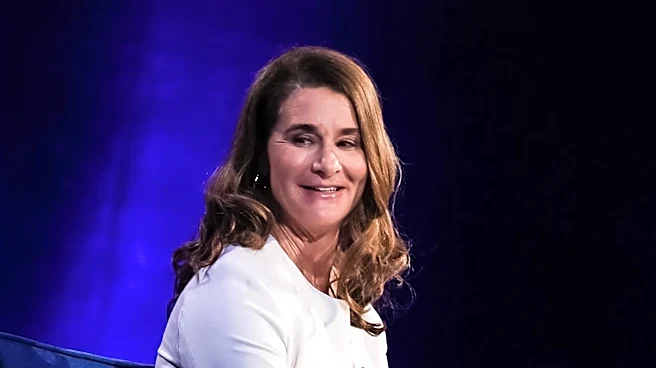
Melinda French Gates recently fact-checked a viral 'Saturday Night Live' sketch titled 'Sister,' which humorously depicted the reliance on female family members for eldercare. French Gates took to Instagram to analyze the sketch's claims using research
from her philanthropic organization, Pivotal. She affirmed several points made in the skit, including that women aged 55 to 64 are nearly 40% more likely than men to provide care for an older relative and are more likely to provide constant care. She also noted that 42% of women who voluntarily left jobs in 2025 cited caregiving as the main reason. French Gates highlighted the financial burden, stating that paid home health aides can cost over $6,600 per month, and 24-hour care can exceed $25,000. She emphasized that the 'free' aspect of a sister's care is misleading, as women often pay through lost wages, stalled careers, and reduced retirement savings. This initiative aligns with her focus on women's health and caregiving since stepping down as co-chair of the Gates Foundation in 2024.
Why It's Important?
This fact-check by Melinda French Gates brings significant attention to the often-overlooked societal issue of eldercare and its disproportionate impact on women in the U.S. By validating the comedic portrayal with real-world data, she underscores the economic and emotional strain placed on female caregivers. The discussion highlights a critical gap in U.S. social support systems, as the country lacks federal paid leave or long-term care insurance for family caregivers, unlike many other wealthy nations. This situation can lead to significant financial instability for women, impacting their career progression, earning potential, and long-term financial security. Her involvement, backed by her substantial philanthropic efforts in women's health—including a recent pledge of $215 million—lends considerable weight to the advocacy for better caregiving policies and support structures. The conversation aims to foster greater honesty about the demands of caring for loved ones and to push for systemic changes that alleviate the burden on women.
What's Next?
Melinda French Gates's public commentary on the 'SNL' sketch is likely to further stimulate discussions around eldercare policies and gender equality in caregiving responsibilities. Her organization, Pivotal, which focuses on women's health and caregiving, will likely continue to fund research and initiatives aimed at addressing these issues. The increased public awareness generated by her fact-check could prompt policymakers to re-evaluate existing support systems for caregivers, potentially leading to legislative proposals for federal paid leave or long-term care insurance. Advocacy groups for women's rights and eldercare are expected to leverage this heightened visibility to push for reforms. Furthermore, the ongoing dialogue may encourage employers to implement more flexible work arrangements and support programs for employees with caregiving responsibilities, recognizing the significant impact on their workforce, particularly women.
Beyond the Headlines
The deeper implications of Melinda French Gates's intervention extend beyond immediate policy discussions, touching upon fundamental societal perceptions of care work. The 'SNL' sketch, and her subsequent validation, expose a cultural norm where caregiving, particularly for the elderly, is often implicitly assigned to women as an unpaid and undervalued role. This perpetuates gender inequality by limiting women's economic participation and career advancement. Ethically, it raises questions about societal responsibility for eldercare and whether it should primarily fall on individual families, especially women, or be a more broadly supported public good. Legally, the absence of comprehensive federal support for caregivers in the U.S. contrasts sharply with other developed nations, highlighting a policy gap that contributes to economic disparities. Culturally, the viral nature of the sketch and French Gates's response suggest a growing public recognition of this issue, potentially signaling a shift towards greater collective accountability and a re-evaluation of the value placed on care work in society.