
What's Happening?
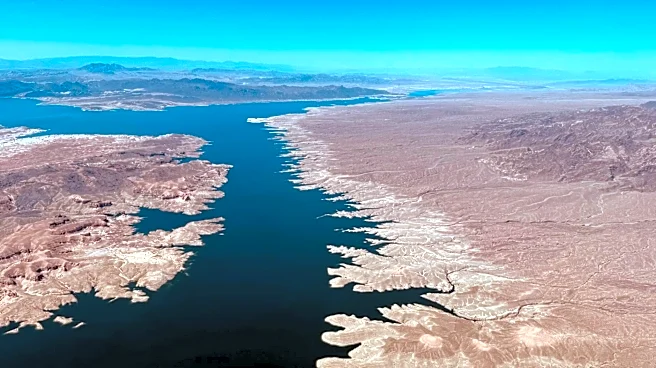
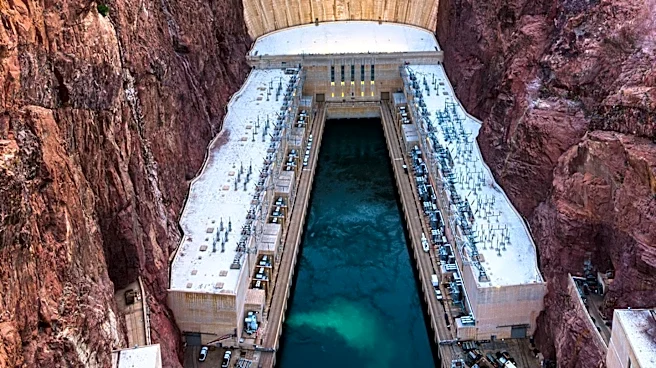
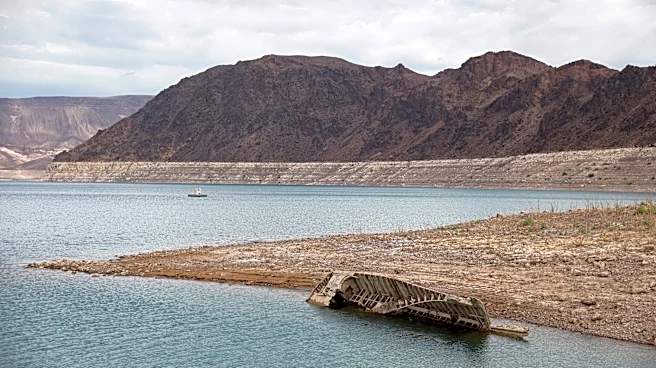
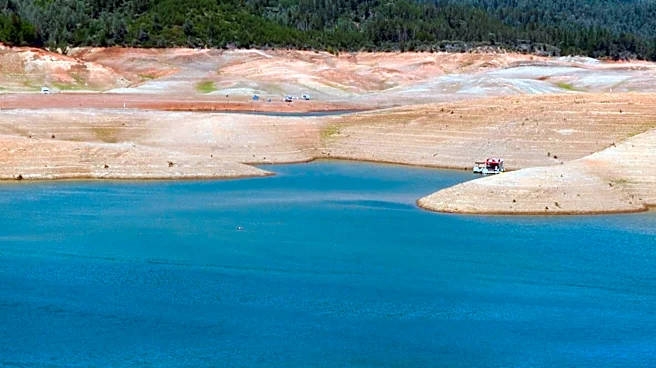
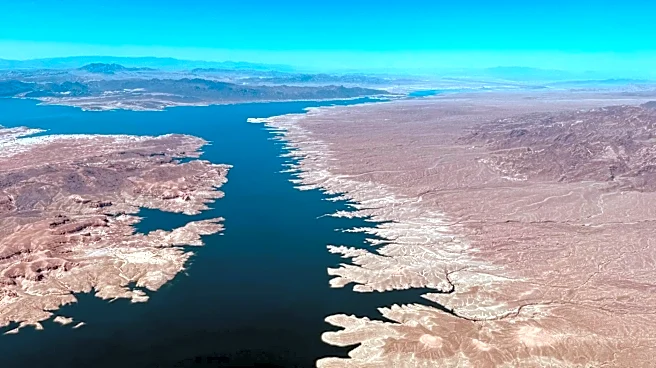
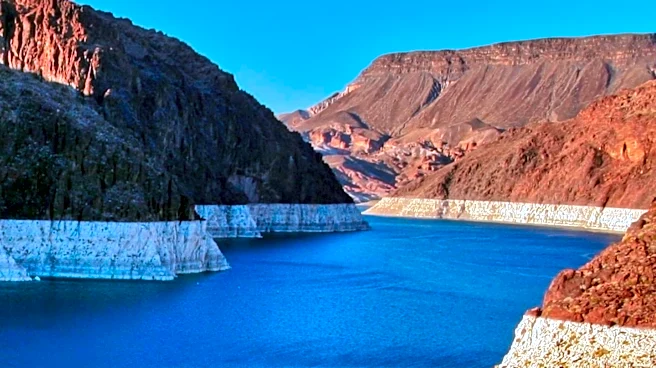
Lake Mead, the largest reservoir in the United States, has hit a record-low water level, exacerbating the water crisis in the drought-stricken West. The reservoir, created by the Hoover Dam, provides water to
millions of people and supports agricultural activities. The decline in water levels is attributed to a long-term drought worsened by climate change, affecting the Colorado River Basin. Federal authorities have released a plan to address water shortages, including cuts to water allocations for states in the lower basin.
Why It's Important?
The record-low water level at Lake Mead highlights the severe impact of climate change on water resources in the Western United States. The situation poses significant challenges for water management, agriculture, and energy production, as the reservoir also generates hydroelectric power. The crisis underscores the need for sustainable water management practices and collaborative efforts among states to address the growing demand for water. The federal plan to reduce water allocations may have far-reaching implications for regional economies and communities.
What's Next?
As the water crisis continues, stakeholders will need to implement and adapt to the federal water management plan. This may involve negotiations among states, Native American tribes, and other stakeholders to ensure equitable water distribution. The situation could prompt further investments in water conservation technologies and infrastructure improvements. Policymakers may also explore long-term strategies to mitigate the effects of climate change on water resources and ensure the sustainability of the Colorado River Basin.