
What's Happening?
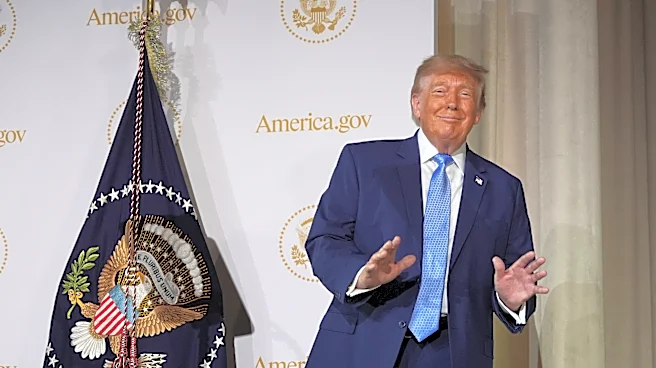
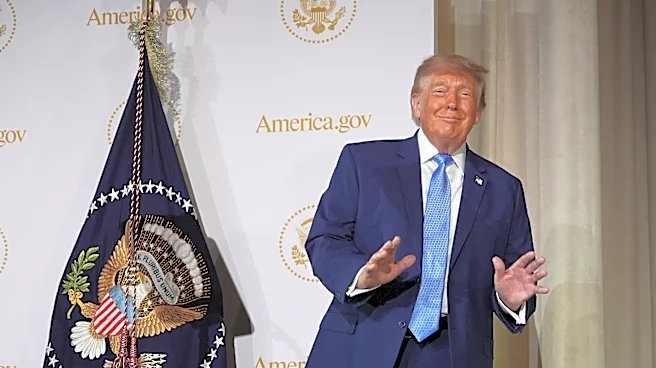
The Trump administration has launched a revamped America.gov, an AI-powered portal intended to serve as a single entry point for federal government services. President Trump signed an executive order establishing
the site, describing it as a 'restoration of America's founding promise.' The chatbot, which identifies itself as 'America,' is designed to answer queries strictly related to the federal government by searching approximately 29,000 government websites and returning answers based on official federal sources. U.S. Chief Design Officer Joe Gebbia confirmed that the site is powered by artificial intelligence from Google's Gemini and Elon Musk's Grok. Currently, the site focuses on providing faster access to government information, offering answers in English, Spanish, or French, voice input, step-by-step guidance on tasks like passport renewals, and help with reading government documents by allowing PDF uploads with automatic personal information removal. The launch is considered Phase 1, with more interactive features planned for 2027.
Why It's Important?
The launch of America.gov signifies a significant shift in how the U.S. federal government aims to interact with its citizens, leveraging advanced AI technology to streamline access to information and services. This initiative could potentially enhance efficiency and user experience for millions of Americans seeking government assistance, from passport renewals to Medicare enrollment. By consolidating information from numerous federal websites into a single, AI-driven platform, the administration seeks to reduce the complexity often associated with navigating government bureaucracy. However, the project also raises important questions regarding data privacy and the reliability of AI in handling sensitive government information. The site's development by the National Design Studio (NDS), which has ties to Elon Musk's 'Department of Government Efficiency' (DOGE), and its use of commercial AI models like Gemini and Grok, highlight a growing trend of integrating private sector technology into public services. The success of America.gov could set a precedent for future government digital initiatives, influencing public policy on technology adoption and citizen engagement.
What's Next?
Phase 2 of America.gov is slated for 2027, with plans to expand the tool's capabilities to allow users to apply for, enroll in, and track progress directly within the chat interface. This includes features such as renewing passports, enrolling in Medicare, checking student loan information, and reserving federal campsites. The administration also plans to add the ability for users to find federal jobs and introduce a mobile app. The site's 'Why you can trust' section states that it does not retain conversations, though some answers may be cached for up to two hours, and it does not save names or IP addresses. However, the long-term implications for privacy, especially when the site begins handling personal identifiable information for applications, remain a key concern. The Guardian previously reported that other sites deployed by the team behind America.gov used commercial tools for user tracking that did not comply with the Privacy Act, suggesting that future scrutiny over data handling will be critical as the platform evolves.
Beyond the Headlines
The introduction of America.gov, while aiming to modernize government services, also brings to light deeper implications concerning the role of AI in public administration and the potential for political influence on information dissemination. Early testing revealed inconsistencies in the chatbot's responses to politically sensitive questions, with answers changing or being deemed 'political' depending on the timing of the query. This raises concerns about the neutrality and objectivity of AI systems when applied to government functions, especially given the site's reliance on commercial AI models and its development by individuals with ties to a politically charged initiative like DOGE. The ethical dimension of an AI chatbot confirming or denying politically charged information, such as election results or involvement in controversial files, underscores the need for robust oversight and transparency in the development and deployment of such tools. The project also highlights the ongoing debate about the balance between technological innovation, data privacy, and public trust in government services.