



What's Happening?
U.S. Senator Tammy Duckworth recently met with members of the Illinois Corn Board in Oglesby to discuss the increasing financial pressures faced by farmers and the broader agriculture industry. The discussions centered on several key areas aimed at mitigating
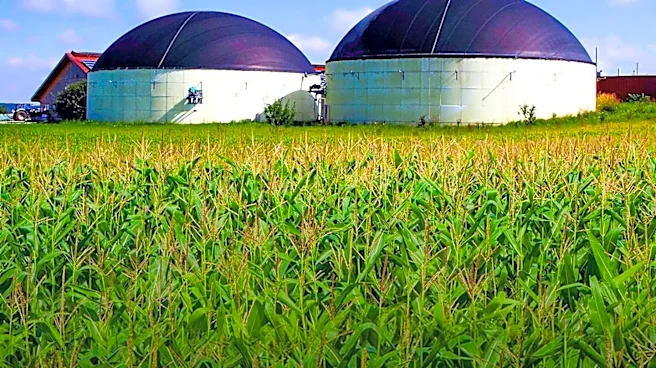
these rising costs, which include higher expenses for diesel, fertilizer, and other essential supplies. Senator Duckworth and the corn growers explored strategies to expand the biofuels market, enhance agricultural exports, and strengthen farm safety net programs. Senator Duckworth has been a vocal proponent of expanding the use of ethanol blends, such as E15, and has actively supported legislation designed to boost the production of biofuels and sustainable aviation fuel. Furthermore, she has advocated for Illinois agriculture in international markets, working to secure commitments for U.S. agricultural products. She emphasized the critical role Illinois farmers play in both the state and national economies, highlighting the need for robust market support at home and abroad.
Why It's Important?
The discussions between Senator Duckworth and Illinois corn growers are significant because they address the economic viability of a crucial sector of the U.S. economy. Rising input costs for farmers, including fuel and fertilizer, directly impact food prices and the overall agricultural supply chain. Expanding the biofuels market, particularly for ethanol and sustainable aviation fuel, offers a dual benefit: it provides new revenue streams for corn farmers and contributes to national energy independence and environmental goals. Increased agricultural exports are vital for the U.S. trade balance and for ensuring global food security, while also supporting domestic farm incomes. Strengthening farm safety net programs is essential for protecting farmers from market volatility and unforeseen challenges, ensuring the stability of agricultural production. The focus on these areas underscores a broader effort to sustain and grow the agricultural sector, which is a cornerstone of the Illinois and national economies.
What's Next?
Following these discussions, it is anticipated that Senator Duckworth will continue to champion legislative efforts aimed at supporting the agricultural sector. This includes advocating for policies that promote the expansion of the biofuels market, such as incentives for ethanol and sustainable aviation fuel production. Farmers and agricultural organizations will likely continue to engage with policymakers to highlight their ongoing challenges and propose solutions. The focus on international markets suggests potential future trade negotiations or agreements designed to increase U.S. agricultural exports. Additionally, there may be renewed efforts to review and enhance existing farm safety net programs to better address the current economic climate and rising operational costs for farmers. These ongoing dialogues and policy initiatives are crucial for the long-term sustainability and competitiveness of the U.S. agriculture industry.
Beyond the Headlines
The dialogue between Senator Duckworth and Illinois corn growers extends beyond immediate economic concerns, touching upon broader themes of energy policy, environmental sustainability, and global trade. The push for biofuels, particularly sustainable aviation fuel, reflects a growing national and international commitment to reducing carbon emissions and transitioning to cleaner energy sources. This initiative could position U.S. agriculture as a key player in the green economy, fostering innovation in bioenergy technologies. Furthermore, the emphasis on agricultural exports highlights the interconnectedness of the U.S. economy with global markets and the importance of maintaining strong international trade relationships. The challenges faced by farmers also underscore the complex interplay between agricultural policy, climate change, and economic stability, prompting a deeper examination of how to build a resilient and sustainable food system for the future. This engagement signifies a proactive approach to addressing multifaceted issues impacting rural communities and the national economy.