






What's Happening?
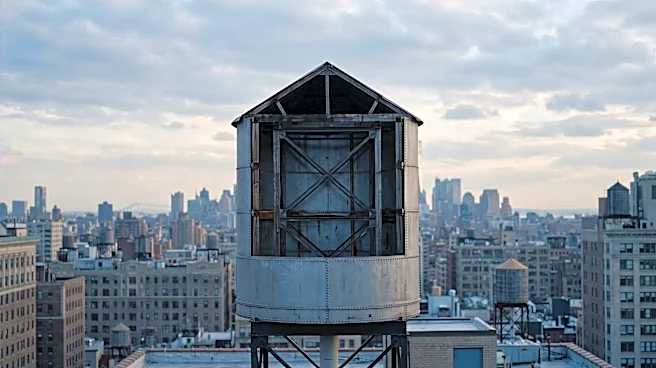
The roof of a water tower on an Upper West Side building in Manhattan, which housed a rare family of barn owls, has been removed. This action has sparked outrage among New Yorkers and conservationists concerned for the owls' safety. The barn owl family,
believed to be the first documented nesting instance in Manhattan in modern history, had drawn significant public attention. Jessica Wilson, executive director of NYC Bird Alliance, observed one barn owl fledgling on a nearby roof after the water tower roof was gone, noting that nocturnal fledglings should not be out during the day, indicating disturbance. The New York State Department of Environmental Conservation (DEC) has launched an investigation into potential violations and has ordered the building owner to halt further demolition of the water tower. State Senator Erik Bottcher condemned the act, emphasizing that active migratory bird nests are protected by state and federal law.
Why It's Important?
This incident underscores the ongoing conflict between urban development and wildlife conservation in densely populated areas like New York City. The barn owl, a species whose population has declined significantly and is rare in NYC, represents a critical part of the local ecosystem. The destruction of their nest, especially during the fledging period when young owls are dependent on their parents, poses a direct threat to their survival and the species' presence in the city. This event highlights potential disregard for environmental regulations and wildlife protection laws, which could set a dangerous precedent if not addressed. It also mobilizes public awareness and advocacy for urban wildlife, demonstrating the community's strong connection to and desire to protect local fauna, as seen with past beloved birds like Flaco the owl and Pale Male the hawk.
What's Next?
The New York State Department of Environmental Conservation (DEC) is actively investigating the removal of the water tower roof and any potential violations of state and federal laws protecting migratory bird nests. The building owner has been ordered to halt further demolition of the water tower until the investigation is complete. Depending on the findings, legal action, fines, or other penalties could be imposed on those responsible for the roof's removal. Conservation groups like NYC Bird Alliance will likely continue to monitor the situation and advocate for the protection of the barn owl family. Public pressure and legislative scrutiny from officials like State Senator Erik Bottcher are expected to continue, pushing for accountability and stronger enforcement of wildlife protection regulations in urban environments. Efforts may also be made to assess the condition of the remaining fledglings and explore potential interventions if their survival is at risk.
Beyond the Headlines
The incident with the Manhattan barn owls brings to light the broader ethical and legal responsibilities of property owners and construction companies regarding urban wildlife. It highlights the need for greater awareness and adherence to environmental protection laws, particularly the Migratory Bird Treaty Act, which protects most native bird species and their nests. This event could serve as a catalyst for increased public education campaigns about urban wildlife and the importance of coexisting with nature in metropolitan areas. It also raises questions about the effectiveness of current enforcement mechanisms and whether penalties are sufficient to deter such actions. Long-term, this situation might prompt discussions on developing more robust protocols for construction projects in areas known to host sensitive wildlife, potentially leading to mandatory wildlife surveys or mitigation strategies before demolition or renovation work begins.