











What's Happening?
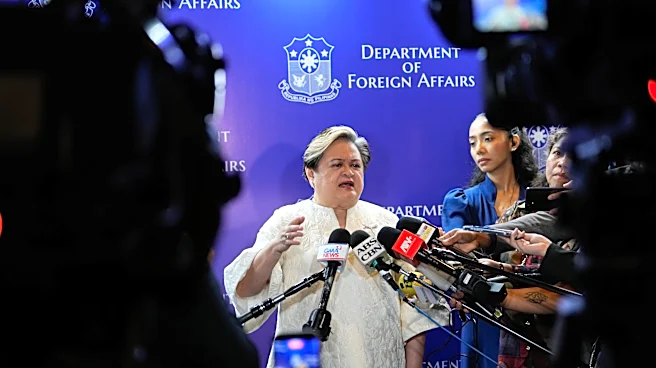
The United States, along with Japan, the Philippines, and 11 other nations, issued a joint statement reaffirming that China's extensive maritime claims in the South China Sea lack legal basis. This statement commemorates the 10th anniversary of a 2016
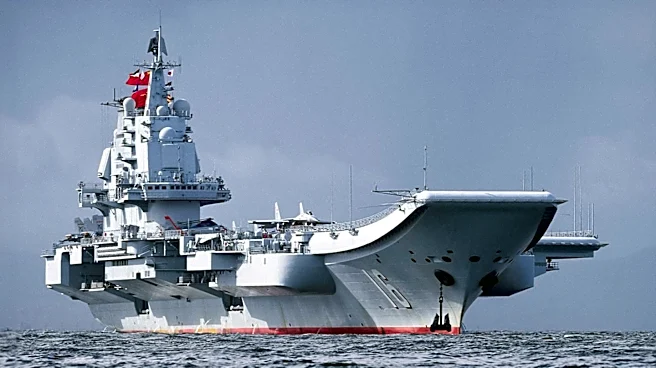
arbitration ruling by the Permanent Court of Arbitration in The Hague, which declared China's claims over the South China Sea as inconsistent with international law. Despite the ruling, China continues to reject it and maintains its claims. The joint statement emphasized the ruling's finality and legal binding nature between China and the Philippines. The Philippines has accused China of engaging in dangerous maneuvers within its exclusive economic zone, including the use of water cannons to disrupt resupply missions to Philippine-held areas.
Why It's Important?
This reaffirmation by the U.S. and its allies underscores the ongoing geopolitical tensions in the South China Sea, a critical maritime region for global trade and military strategy. The region is a flashpoint for potential conflict, given its strategic importance and the overlapping territorial claims. The joint statement highlights the international community's support for the rule of law in maritime disputes, which could influence future diplomatic and military engagements in the region. The U.S. and its allies' stance may also impact China's relations with these countries, potentially affecting trade, security alliances, and regional stability.
What's Next?
The reaffirmation of the arbitration ruling may lead to increased diplomatic efforts to resolve the South China Sea disputes peacefully. However, it could also escalate tensions if China continues to assert its claims aggressively. The involved nations might seek further international support to pressure China into compliance with international law. Additionally, there could be increased military presence and joint exercises by the U.S. and its allies in the region to deter any aggressive actions by China. The situation will likely remain a focal point in international relations and security discussions.