




What's Happening?
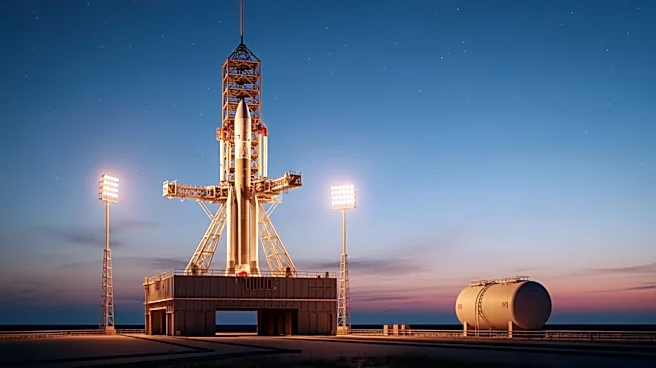
NASA's Goddard Space Flight Center has released a draft request for proposals for the Landsat 10 spacecraft, marking the beginning of a competitive process to support the Earth observation mission scheduled for launch in 2031. The selected contractor
will be responsible for the design, engineering, development, fabrication, integration, testing, and evaluation of a single Landsat 10 observatory. This includes integrating the Landsat Next Instrument Suite, conducting mission readiness and ground simulation activities, and supporting launch and commissioning operations. The contract will be firm-fixed-price and time-and-materials, with a performance period of about five and a half years, including options for potential launch delays. Responses to the presolicitation are due by June 2, with the final request for proposals expected in late June.
Why It's Important?
The Landsat 10 mission underscores the increasing importance of space-based imaging and monitoring technologies in understanding and managing Earth's resources. This initiative is part of NASA's ongoing efforts to modernize its Landsat program, which has been crucial for environmental monitoring, agriculture, forestry, and land use planning. The mission will continue the legacy of previous Landsat missions, providing critical data for scientific research and policy-making. The competition for the contract is expected to drive innovation and efficiency in spacecraft design and development, potentially benefiting the broader aerospace industry. The mission's success could enhance the U.S.'s capabilities in Earth observation, contributing to global efforts in climate change monitoring and natural resource management.
What's Next?
Following the presolicitation phase, NASA plans to release the final request for proposals in late June, with submissions due approximately 30 days later. The agency will then evaluate the proposals and select a contractor to build and test the Landsat 10 observatory. The selected contractor will need to address payload integration issues, mission risks, and evolving program requirements. As the project progresses, stakeholders in the aerospace industry, environmental science, and government agencies will be closely monitoring developments, given the mission's potential impact on Earth observation capabilities and environmental policy.