


What's Happening?
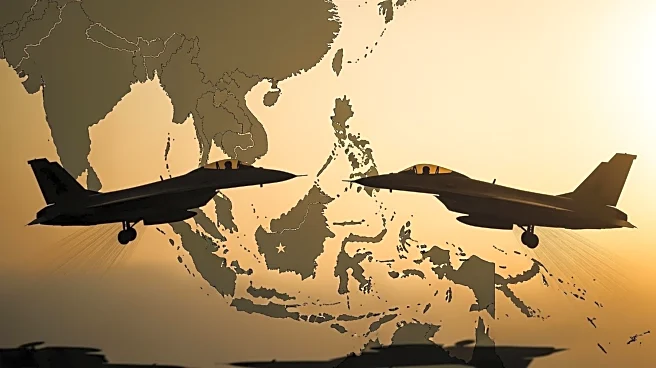
India is enhancing its military relationships with Southeast Asian nations by selling advanced missile systems and increasing security cooperation. This move is part of India's strategic role in the Indo-Pacific region, where several countries are involved
in maritime disputes with China. Notably, India has begun delivering the BrahMos missile system to the Philippines under a $375 million deal, aimed at boosting Manila's maritime defense amid tensions with China in the South China Sea. Additionally, India is in talks with Indonesia to supply BrahMos missiles, marking Indonesia as the second country to acquire these missiles. This initiative is part of a broader strategy to strengthen defense ties with countries like Vietnam and Indonesia, which have been upgraded to comprehensive strategic partnerships. These efforts are complemented by India's growing defense collaboration with the United States, including a 10-year defense pact signed recently.
Why It's Important?
India's actions are significant as they represent a strategic shift in the Indo-Pacific region, where China has been a dominant force. By bolstering military capabilities in Southeast Asia, India is helping these nations build deterrence against China's assertive maritime claims. This move also aligns with the United States' strategy to counterbalance China's influence by encouraging allies to strengthen regional security ties. For Southeast Asian countries, acquiring defense technology from India offers an alternative to reliance on the U.S. or riskier options like Russia or China, which could involve sanctions. India's emergence as a defense exporter without political strings attached makes it an attractive partner for these nations, enhancing regional stability and security.
What's Next?
India's continued delivery of the BrahMos missile system to the Philippines and potential deals with other Southeast Asian countries could further solidify its role as a key defense partner in the region. As these countries seek to diversify their defense partnerships, India's involvement may lead to more joint military exercises and training programs. The strengthening of these ties could also prompt reactions from China, which may view India's growing influence as a challenge to its regional dominance. Additionally, the U.S. may continue to support India's efforts as part of its broader Indo-Pacific strategy, potentially leading to more collaborative defense initiatives.
Beyond the Headlines
India's increasing role in Southeast Asian security highlights a shift towards multipolarity in regional defense strategies. This development reflects a broader trend of countries seeking to balance relations with major powers while enhancing their own security capabilities. The collaboration between India and Southeast Asian nations also underscores the importance of regional partnerships in addressing shared security challenges. As India continues to expand its defense exports, it may also influence global arms trade dynamics, offering an alternative to traditional suppliers like the U.S., Russia, and China.