







What's Happening?
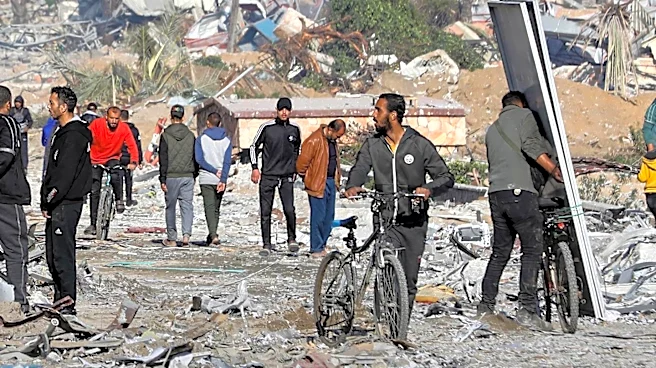
The United Nations Office for the Coordination of Humanitarian Affairs (OCHA) has issued a warning about a severe food crisis in Gaza that could escalate into a famine. According to OCHA, 67% of Gaza's population is experiencing food insecurity, with
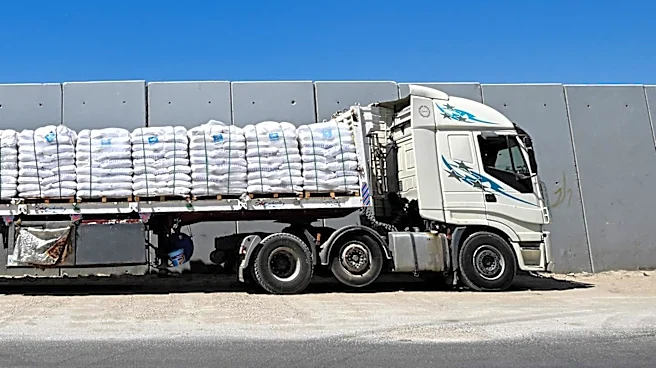
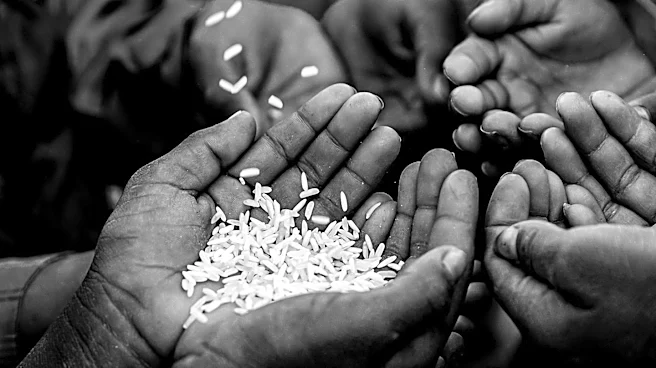
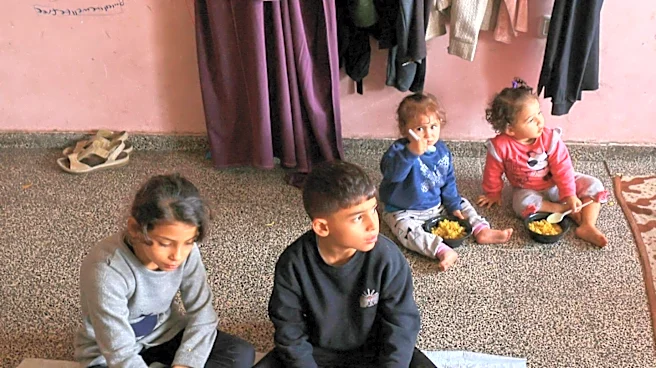
over 200,000 people living in conditions that typically precede a formal famine declaration. The situation is particularly dire for children, who continue to suffer from malnutrition. Community kitchens have become a primary food source, offering mainly rice and staple foods, but these do not provide adequate nutrition, especially protein, necessary for children's growth.
Why It's Important?
The potential famine in Gaza highlights the ongoing humanitarian crisis in the region, exacerbated by political and military conflicts. The food insecurity affects a significant portion of the population, with children being the most vulnerable. This situation could lead to long-term health issues and developmental problems for the affected children. The crisis also underscores the need for international intervention and support to prevent a full-scale famine and address the underlying causes of food insecurity in Gaza.
What's Next?
If the situation continues to deteriorate, there may be increased calls for international aid and intervention to prevent a famine. Humanitarian organizations might intensify their efforts to provide food and nutritional support to the affected population. Additionally, there could be diplomatic efforts to address the political and military factors contributing to the crisis.