





What's Happening?
Filmmaker Josh Safdie is serving as an executive producer for John Wilson's new documentary, 'The History of Concrete.' The film explores the ubiquitous material, concrete, and its profound impact on the physical world, including infrastructure. Wilson's documentary delves
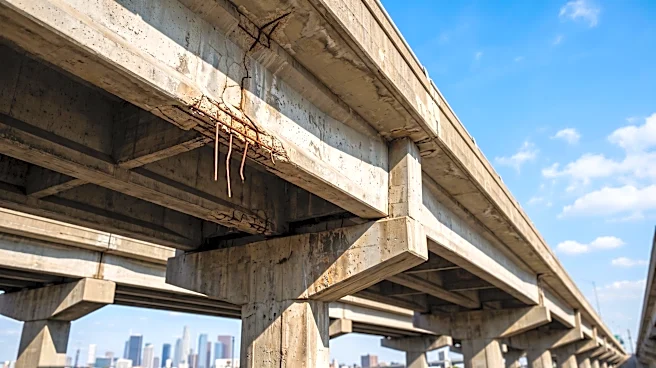
into various aspects of concrete, from its presence in everyday life to its critical role in major structures like the Brooklyn-Queens Expressway, which is depicted as being in a grievous state of deterioration. The film also touches upon the challenges of funding and producing such a documentary, with Wilson encountering skepticism from executives regarding the subject's appeal. Safdie's involvement highlights a collaboration between two distinctive voices in contemporary filmmaking, with Wilson known for his observational style and Safdie for his intense, character-driven narratives.
Why It's Important?
The involvement of a prominent director like Josh Safdie as an executive producer lends significant weight and visibility to 'The History of Concrete.' This collaboration could draw a wider audience to a documentary that tackles a seemingly mundane yet critically important subject: infrastructure. The film's exploration of deteriorating concrete infrastructure, as exemplified by the Brooklyn-Queens Expressway, underscores a pressing national issue. The potential for catastrophic failures due to neglected concrete, such as falling debris on motorists or irreparable public facilities like swimming pools, highlights the urgent need for investment and attention to America's aging infrastructure. By humanizing the material world and revealing the hidden complexities and vulnerabilities of our built environment, the documentary could spark greater public awareness and potentially influence policy discussions around infrastructure maintenance and development.
What's Next?
The documentary 'The History of Concrete' is currently being screened, with special Q&A sessions featuring John Wilson and guests. The film's release is expected to continue to generate discussion around the state of U.S. infrastructure. The collaboration between Wilson and Safdie may also pave the way for future projects that blend observational filmmaking with broader societal concerns. As the film gains traction, it could prompt increased scrutiny from local and federal authorities regarding the condition of concrete structures across the nation. The insights presented in the documentary, particularly concerning the financial and logistical challenges of addressing infrastructure decay, could inform future policy debates and funding initiatives aimed at preventing potential disasters and ensuring public safety.
Beyond the Headlines
Beyond its immediate focus on concrete, 'The History of Concrete' delves into deeper implications about how society values and perceives the foundational elements of its existence. The film's narrative, which includes Wilson's struggle to secure funding for a documentary about concrete, subtly critiques the entertainment industry's preference for more sensational topics over essential, albeit less glamorous, subjects. This raises questions about what stories are deemed worthy of telling and funding, and how this influences public understanding of critical issues. The documentary also touches on the ethical responsibility of maintaining infrastructure for public safety, contrasting the visible effects of neglect with the often-unseen processes of decay. The film's ability to find humor and humanity in such a seemingly dry subject suggests a broader cultural shift towards appreciating the overlooked aspects of our material world and the people who interact with it.