



What's Happening?
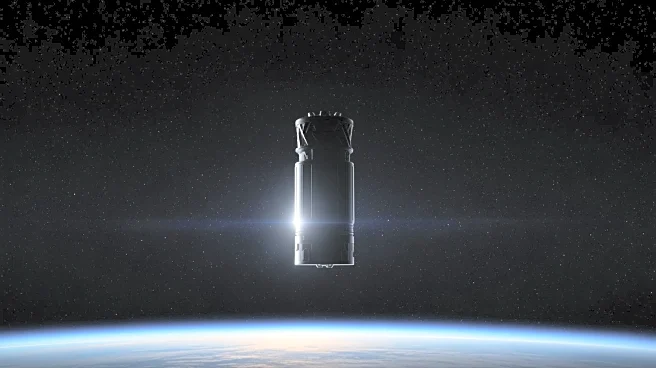
The Hubble Space Telescope, a pivotal tool in modern astronomy since 1990, is experiencing orbital decay due to atmospheric drag and increased solar activity. Without intervention, it could reenter Earth's atmosphere as early as 2029, with a median forecast
of 2033. The telescope's descent is influenced by solar cycles that affect atmospheric density, accelerating its orbital decay. NASA's Goddard Space Flight Center is monitoring the situation, but with the retirement of the space shuttle program, no further reboost missions have been conducted since 2009. This situation has sparked discussions about Hubble's legacy and the future of space observation.
Why It's Important?
Hubble's potential reentry poses significant implications for the field of astronomy. The telescope has been instrumental in numerous discoveries, including the expansion rate of the universe and the existence of black holes. Its loss would create a gap in space-based observations, particularly in ultraviolet and near-infrared capabilities. The situation underscores the need for planning in the post-Hubble era, potentially accelerating the development of successor telescopes. The event also highlights the challenges of managing aging space assets and the importance of international cooperation in space policy.
What's Next?
As Hubble's reentry timeline becomes clearer, discussions are underway regarding potential interventions or replacements. NASA and private sector entities, like SpaceX, have explored options for reboost missions, though no concrete plans have been finalized. The situation may prompt increased investment in new telescopes and innovative space policies to ensure continuity in astronomical research. The scientific community is also considering how to integrate Hubble's data with newer observatories to maintain the momentum of space exploration.