


What's Happening?
Human Rights Watch, alongside the American Friends Service Committee, the Center for Constitutional Rights, and the Open Society Foundations, has filed a lawsuit against the administration of President Trump. The lawsuit challenges the administration's
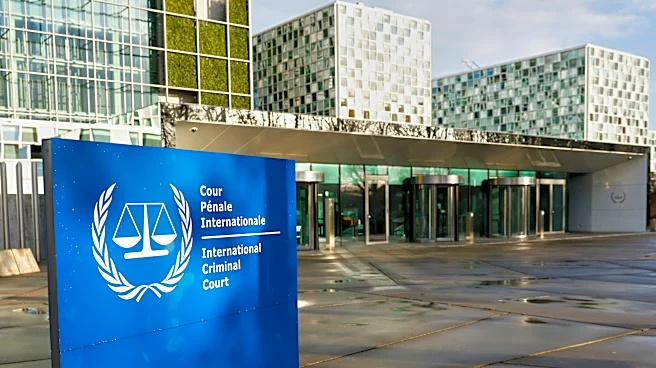
actions of targeting the International Criminal Court (ICC) and sanctioning its judges, prosecutors, and human rights organizations. The plaintiffs argue that these sanctions constitute an attack on the rule of law, severely hindering efforts to bring perpetrators of genocide, war crimes, and crimes against humanity to justice. They contend that the sanctions infringe upon their constitutional rights, including free speech, association, and religion, and violate both U.S. and international law. The lawsuit highlights a perceived hypocrisy, noting the U.S.'s historical involvement in drafting the 1998 Rome Statute that established the ICC, despite not becoming a member. While the U.S. has supported ICC investigations in various countries, it has openly opposed investigations into Afghanistan and Palestine, particularly those that could implicate U.S. forces. The Trump administration's sanctions followed the ICC's issuance of arrest warrants for Israeli Prime Minister Benjamin Netanyahu and then-Defense Minister Yoav Gallant in November 2024, citing alleged war crimes and crimes against humanity in Palestine.
Why It's Important?
This lawsuit is significant as it directly challenges the U.S. government's approach to international legal institutions and human rights. The sanctions imposed by the Trump administration, described as a 'financial death penalty,' have far-reaching implications, barring sanctioned individuals and their families from entering the U.S., freezing U.S.-based assets, and revoking access to American products and services. Furthermore, individuals supporting sanctioned entities face potential imprisonment or sanctions themselves. This aggressive stance against the ICC could undermine the court's ability to function effectively and deter future investigations into serious international crimes. The U.S.'s position, which asserts that the ICC lacks jurisdiction over U.S. nationals and its allies, raises questions about the universality and enforceability of international law. Critics argue that this approach prioritizes short-term national interests over global legal order and accountability, potentially eroding international trust in the U.S. as a proponent of liberal international norms. The outcome of this lawsuit could set a precedent for how the U.S. interacts with international legal bodies and influence the future of global human rights enforcement.
What's Next?
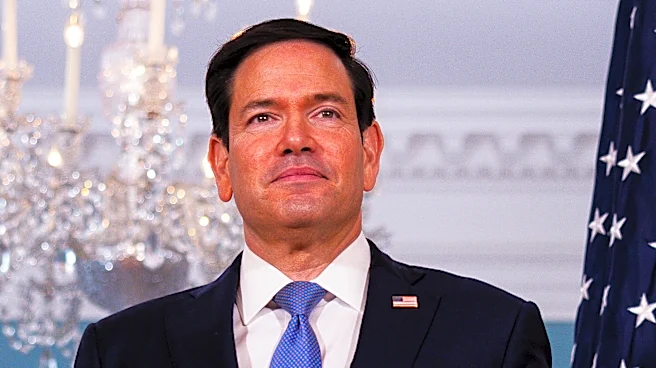
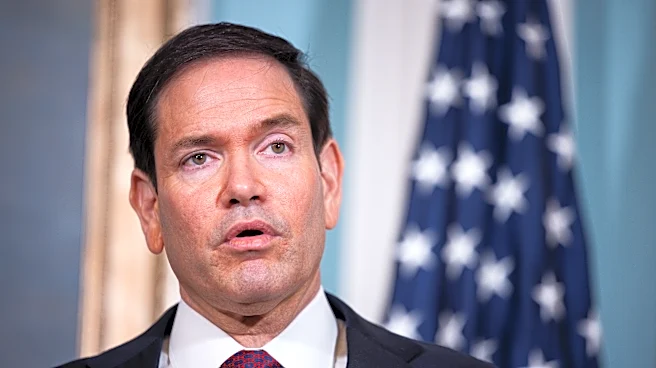
The lawsuit will proceed through the U.S. legal system, with the plaintiffs seeking to overturn the sanctions and challenge the Trump administration's policies regarding the ICC. The administration is expected to defend its actions, likely reiterating its stance that the ICC's actions are 'illegitimate and baseless' and infringe upon national sovereignty. Secretary of State Marco Rubio has vowed to 'dismantle' the ICC, indicating a continued aggressive posture from the U.S. government. The legal battle could be protracted, potentially reaching higher courts. Beyond the immediate legal proceedings, the case will likely intensify the ongoing debate about the U.S.'s role in the international legal order and the balance between national sovereignty and international accountability. The international community, including human rights organizations and other nations, will closely watch the developments, as the outcome could influence their own engagement with the ICC and their perceptions of U.S. commitment to international law. The broader implications for the ICC's legitimacy and operational capacity will also be a key focus.
Beyond the Headlines
The lawsuit against the Trump administration's sanctions on the ICC delves into deeper ethical and legal questions about the application of international law and the concept of universal jurisdiction. The U.S.'s historical involvement in establishing the ICC, coupled with its refusal to ratify the Rome Statute and its subsequent opposition to investigations involving its personnel or allies, highlights a complex and often contradictory relationship with international legal frameworks. This 'America first' unilateralism, as described by critics, risks creating a two-tiered system of justice where powerful nations can selectively engage with international law. The establishment of President Trump's 'Board of Peace' as a potential alternative to the UN further underscores a shift towards a model of global governance based on geopolitical alignment rather than established legal standards. This approach could exacerbate existing systemic flaws in the international order, such as the disproportionate influence of powerful states and the exclusion of the Global South. The lawsuit, therefore, is not just about specific sanctions but about the fundamental principles governing international justice, human rights, and the future of multilateralism in a rapidly changing global landscape.