



What's Happening?
Iran's Foreign Ministry announced that its forces struck US Patriot air defense systems and drone and missile launch platforms in Kuwait and Bahrain, describing these actions as self-defense amid ongoing hostilities with the United States. According to
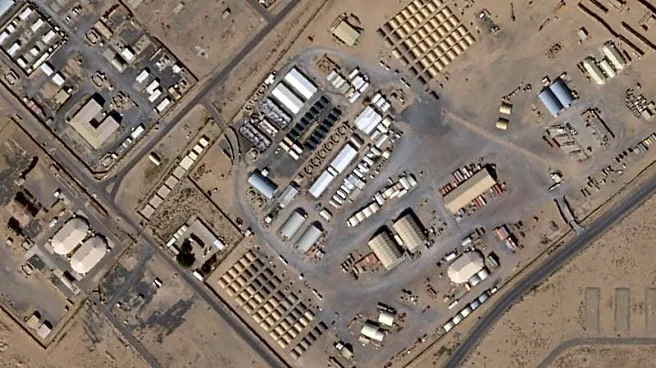
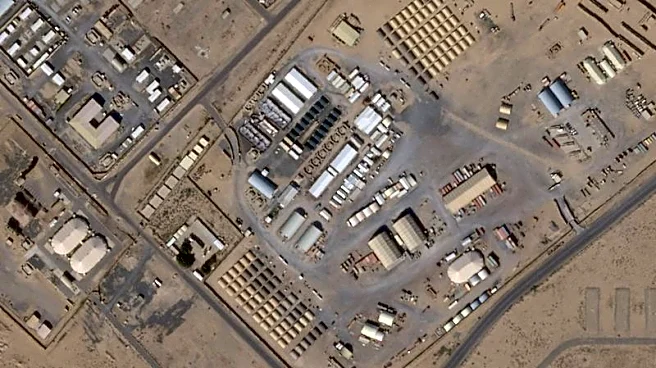
Tehran, these strikes were aimed at targeting sources of attacks against Iran and their supporting infrastructure. Iran's army specifically claimed its drones targeted US Patriot systems at Ali Al Salem Air Base in Kuwait. Kuwait condemned these attacks as a violation of its sovereignty, reporting responses to 'hostile' drones. Bahrain also stated its air defense systems intercepted Iranian aerial attacks. These events occur as tensions between Iran and the United States persist following a US-Israeli military offensive against Iran that began on February 28, with disagreements over sanctions, a US naval blockade, and security arrangements in the Strait of Hormuz complicating efforts to end the conflict.
Why It's Important?
These alleged strikes signify a significant escalation in the ongoing tensions between Iran and the United States, directly impacting U.S. military assets and personnel stationed in the Middle East. The claims of targeting Patriot systems, critical for air defense, highlight Iran's asserted capability to challenge U.S. military presence and potentially degrade its defensive posture in the region. This development could further destabilize an already volatile area, increasing the risk of broader conflict. For the U.S., it underscores the persistent threats faced by its forces and allies, potentially necessitating a review of defense strategies and asset deployment in the Gulf. The involvement of Kuwait and Bahrain as targets also draws regional allies deeper into the conflict, complicating diplomatic efforts and regional security dynamics.
What's Next?
The immediate aftermath will likely involve further statements and condemnations from the U.S. and its allies, potentially leading to increased military readiness and defensive measures in the region. The U.S. may seek to verify the extent of the alleged damage and respond diplomatically or militarily, depending on the assessment. International bodies may also call for de-escalation and dialogue. The ongoing disagreements over the implementation of a memorandum of understanding reached in Islamabad in June, coupled with issues like sanctions and the naval blockade, suggest that a resolution to the broader conflict remains distant. Further incidents in the Strait of Hormuz, a critical global energy shipping route, could also occur, impacting international trade and energy markets.
Beyond the Headlines
The narrative of 'self-defense' employed by Iran is crucial for understanding its strategic positioning and justification for these actions, framing its military operations as reactive rather than purely aggressive. This rhetoric aims to garner regional and international support or at least mitigate condemnation. The alleged use of drones in these attacks also points to the evolving nature of modern warfare, where unmanned aerial vehicles are becoming a primary tool for asymmetric warfare and precision strikes. This trend poses significant challenges for traditional air defense systems and necessitates continuous innovation in counter-drone technologies. The persistent instability in the Gulf region, fueled by these confrontations, has long-term implications for global energy security and the geopolitical balance of power, potentially leading to a more entrenched and militarized regional landscape.