







What's Happening?
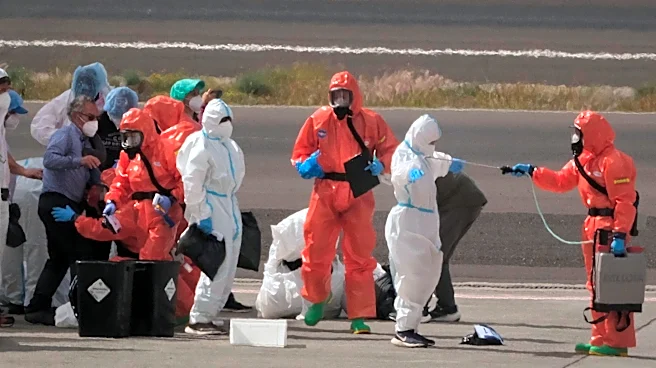
Two Maryland residents are under observation by health officials after potential exposure to the hantavirus during international travel. The exposure is linked to a flight that included a passenger from a cruise ship where a hantavirus outbreak occurred.
The Maryland Department of Health has emphasized that the risk to the public remains very low. The hantavirus strain involved, known as the Andes virus, is primarily found in South America and is unique for its limited potential for person-to-person transmission. Dr. Kari Debbink from Johns Hopkins University noted that the virus does not spread efficiently between people, requiring close and prolonged contact for transmission. The Maryland residents were not passengers on the cruise ship but are being monitored as a precaution. Health officials are conducting contact tracing and coordinating with federal and international partners, including the CDC, to manage the situation.
Why It's Important?
The monitoring of these Maryland residents highlights the ongoing vigilance required in managing infectious diseases, especially those with potential for international spread. The hantavirus, while not as easily transmissible as other viruses like COVID-19, still poses a public health concern due to its severe symptoms and potential for fatality. The situation underscores the importance of international cooperation in disease monitoring and response, as well as the need for public awareness about travel-related health risks. The low risk to the general public is reassuring, but the incident serves as a reminder of the interconnectedness of global health and the need for robust health surveillance systems.
What's Next?
Health officials will continue to monitor the two Maryland residents for any symptoms of hantavirus, which can include fever, fatigue, and shortness of breath. The incubation period for the virus can range from four to 42 days, necessitating ongoing observation. The Maryland Department of Health will maintain coordination with the CDC and other international health bodies to track any further developments. Public health advisories may be updated based on new information, and travelers are advised to remain informed about potential health risks associated with international travel.