




What's Happening?
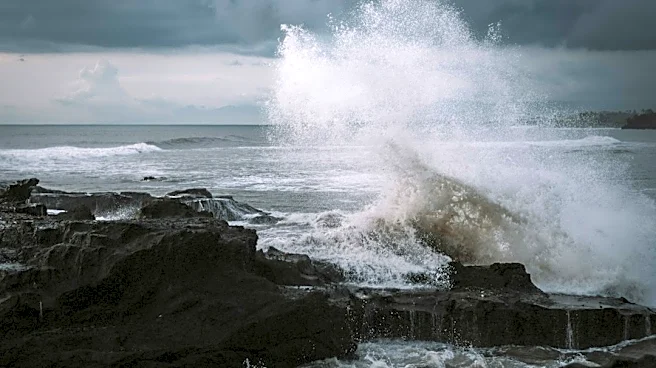
Multimillion-dollar beachfront homes in Seal Beach, California, have been severely impacted by powerful El Niño-fueled waves, which breached protective sand barriers and caused significant damage. Despite efforts by city officials to reinforce defenses,
the oceanic onslaught led to widespread cleanup efforts. Long Beach also experienced substantial property damage in October due to high surf and major Pacific storms, exacerbated by Tropical Storm Rachel. Further south, an ominous crack has appeared in a coastal bluff beneath The Ritz-Carlton, Laguna Niguel, in Dana Point, raising fears of a potential collapse onto a popular beachside trail. This fissure, along with a 360-foot-long crack near El Morro at Crystal Cove State Park that required a $4 million emergency stabilization project, signals increasing vulnerability along California's coastline as a potentially historic El Niño winter approaches.
Why It's Important?
The battering of California's coastline by El Niño-driven waves highlights the significant economic and safety risks faced by coastal communities in the U.S. The damage to multimillion-dollar homes and critical infrastructure, such as the Pacific Coast Highway, underscores the financial burden of extreme weather events. Property owners face substantial repair costs, while local governments incur expenses for emergency stabilization projects and ongoing defense reinforcement. The threat of bluff collapses, particularly near popular public areas and luxury resorts, poses serious safety concerns for residents and tourists. This situation also brings into focus the long-term sustainability of coastal development in the face of rising sea levels and increased storm intensity, prompting questions about insurance coverage, property values, and the future of beachfront living.
What's Next?
California coastal communities are bracing for more destructive surf, erosion, and flooding in the coming months as the El Niño winter progresses. City officials in Seal Beach have warned of further trouble, with unusually high 'king tides' expected from November 22 through November 27. Residents are being urged to secure outdoor belongings, clear drainage areas, and utilize sandbags to protect vulnerable entrances. Authorities are also monitoring the structural integrity of coastal bluffs, particularly the fissure beneath The Ritz-Carlton, Laguna Niguel, to assess immediate threats and plan for potential stabilization efforts. The ongoing El Niño conditions mean that coastal areas will likely face continued challenges, requiring sustained vigilance and resource allocation for protection and recovery.
Beyond the Headlines
The escalating damage along California's coast due to El Niño events points to a deeper societal challenge regarding coastal land use and climate adaptation. The repeated impacts raise questions about the wisdom of building and maintaining expensive properties in highly vulnerable areas. This situation could lead to increased debates over managed retreat strategies, stricter building codes, and the allocation of public funds for private property protection. Furthermore, the environmental impact of coastal erosion on natural habitats and ecosystems is a growing concern. The events serve as a stark reminder of the complex interplay between natural climate cycles, human development, and the long-term consequences of environmental change, potentially influencing future policy decisions on coastal zone management and climate resilience.