





What's Happening?
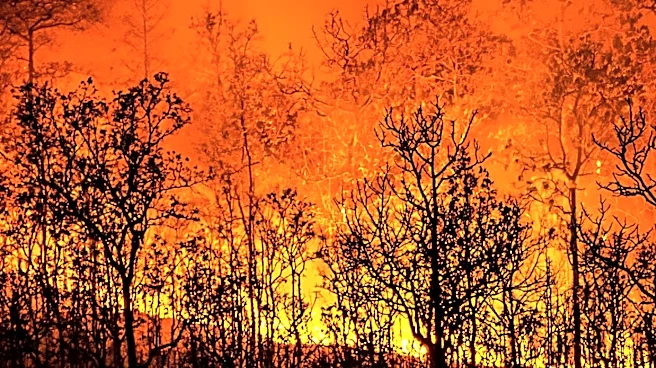
Oregon lawmakers, including Senator Jeff Merkley and Representative Maxine Dexter, have expressed serious concerns about firefighter fatigue as wildfires continue to expand in the Mount Hood National Forest. The Austin Fire, which flared up recently,
has grown to over 8,000 acres, turning McIver State Park into a temporary base for fire crews. During a visit to the Estacada fire camp, Senator Merkley and Representative Dexter spoke with firefighters, noting the unpredictable nature of the current fire season and the toll it is taking on personnel. Representative Dexter highlighted worries about the availability of sufficient firefighters as the season progresses, stating that 'people are tired' and that firefighters are being drawn from across the country. Senator Merkley underscored the gravity of the situation by referencing the devastating 2020 fires, which destroyed six Oregon towns.
Why It's Important?
The escalating concern over firefighter fatigue and resource depletion in Oregon has significant implications for public safety, environmental protection, and state budgets. The prolonged and intense wildfire seasons, exacerbated by climate change, are straining emergency response systems. A fatigued firefighting force increases the risk of accidents, reduces operational effectiveness, and can lead to longer, more destructive fires. This situation also highlights the need for sustainable long-term strategies for wildfire management, including year-round staffing and increased funding for resources. The economic impact of these fires is substantial, affecting property, infrastructure, and natural resources, and displacing communities. The lawmakers' warnings underscore a critical challenge facing not only Oregon but also other Western states grappling with increasingly severe wildfire seasons, necessitating a reevaluation of current fire response models and resource allocation.
What's Next?
Oregon lawmakers are actively working to address the resource challenges by advocating for increased firefighter pay, enhanced National Guard training, and additional helicopter support. Representative Dexter suggested that Oregon may need to consider year-round staffing for fire response, indicating a potential shift in how the state manages its firefighting capabilities. The ongoing wildfire season means that these measures are urgently needed, not just in Oregon but across the Western U.S. For some deep-seated forest fires, the only definitive end may come with the first snowfall of the season, prolonging the strain on resources. The discussions and actions by lawmakers suggest a move towards more robust and permanent solutions to combat the growing threat of wildfires, including legislative efforts to secure more funding and personnel.
Beyond the Headlines
The issue of firefighter fatigue and resource strain in Oregon points to a broader systemic challenge driven by climate change and its impact on natural disasters. The increasing frequency and intensity of wildfires are forcing states to reconsider their emergency preparedness and response frameworks. This situation raises ethical questions about the sustainability of relying on seasonal or temporary firefighting forces in the face of year-round threats. It also highlights the critical need for proactive forest management, community resilience planning, and investment in advanced fire suppression technologies. The long-term implications include potential shifts in population distribution, increased insurance costs, and a greater emphasis on climate adaptation strategies. The human cost, both for the firefighters on the front lines and the communities affected by the fires, underscores the urgent need for comprehensive and sustained policy interventions.