



What's Happening?
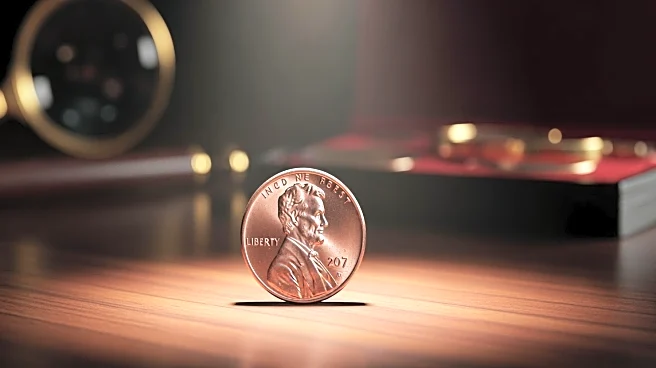
The U.S. Mint's last batch of pennies, produced before the cessation of their production in November, was sold at an auction for a total of $16.76 million. The auction, conducted by Stack’s Bowers Galleries, featured 232 sets of three pennies each, with
the final set fetching $800,000. This set included the last three pennies ever made and the dies used to strike them. John Kraljevich, director of numismatic Americana at Stack’s Bowers, noted the unprecedented nature of the auction, highlighting the unique historical and cultural significance of the pennies. Each set contained pennies from the Philadelphia and Denver Mints, along with a 24-karat gold penny, all marked with a unique Omega symbol.
Why It's Important?
The auction of the last U.S. pennies underscores the cultural and historical value attributed to these coins, despite their minimal face value. The significant sums paid by collectors reflect a deep-seated nostalgia and the penny's embeddedness in American culture. The end of penny production marks a shift in U.S. currency practices, potentially influencing future decisions on coinage and currency management. This event also highlights the broader trend of digital transactions reducing the need for physical currency, prompting discussions on the future of other low-denomination coins.
What's Next?
The cessation of penny production may lead to further evaluations of the necessity of other coins in circulation, such as nickels and dimes. The U.S. Mint and policymakers might consider the economic implications of maintaining or discontinuing these coins, especially in an increasingly cashless society. Collectors and numismatists will likely continue to seek out rare and historical coins, driving up their market value. Additionally, the cultural impact of the penny's discontinuation may spur public discourse on the evolution of currency and its role in American life.
Beyond the Headlines
The end of penny production raises questions about the environmental impact of coin minting and the potential benefits of reducing metal usage. It also reflects broader economic shifts towards digital and contactless payments, which have been accelerated by technological advancements and changing consumer preferences. The penny's phase-out could serve as a case study for other countries considering similar moves, influencing global currency practices.