








What's Happening?
Experts from the University of Virginia (UVA) recently convened to discuss the societal impact and infrastructure demands of AI data centers, particularly in Northern Virginia, a region with a high concentration of such facilities. Peter Beling, a professor
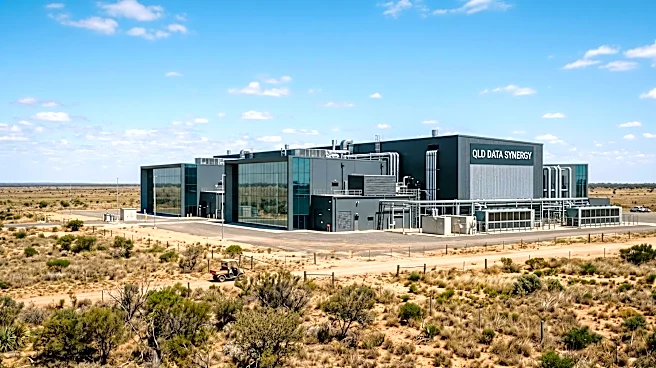
of data science, explained that AI data centers provide the computing infrastructure for training large AI models and running them once deployed. He noted that while early AI focused on training, demand is shifting towards inference and AI agents, which can perform complex tasks on users' behalf, further accelerating the need for computing power. René Cummings, an AI ethicist, highlighted the emotional costs and lack of transparency for communities hosting these centers, while Patrick Higgins, director of the LaCross Institute, emphasized the need to distribute economic benefits to these communities.
Why It's Important?
The rapid expansion of AI data centers raises significant questions about their environmental, social, and economic consequences. These facilities consume substantial electricity and water, impacting local resources and potentially contributing to climate change. The discussion underscored concerns from residents about electricity reliability, water usage, and potential long-term health effects, highlighting a research gap in understanding these impacts. Economically, while data centers generate tax revenue, the benefits may not be visibly distributed to local communities, leading to feelings of disenfranchisement. Furthermore, the concentration of computing power in these centers has national security implications, as access to such infrastructure is crucial for global AI competitiveness, particularly between the United States and other nations.
What's Next?
The ongoing expansion of AI data centers will necessitate continued dialogue and research into their long-term effects. Policymakers are urged to consider the emotional and social costs on communities, alongside economic and environmental factors, when making decisions about data center development. There will likely be increased pressure for greater transparency from technology companies regarding their operations and resource consumption. Engineering solutions, such as capturing waste heat, may become more prevalent. The debate will continue regarding the balance between national competitiveness in AI and ensuring democratic participation and equitable distribution of benefits for local communities. Future AI infrastructure may also see a shift towards more decentralized computing and even space-based solutions.
Beyond the Headlines
The conversation about AI data centers extends beyond immediate infrastructure concerns to touch upon fundamental questions of power, equity, and the future of work. The potential for AI to automate jobs, while creating new ones, presents a complex challenge for communities that provide the resources for these centers. The concentration of power among technology companies and investors, coupled with communities' limited influence over development decisions, highlights a broader imbalance in the digital economy. This situation calls for a re-evaluation of how technological progress is managed to ensure it serves the broader public good, rather than exacerbating existing inequalities. The ethical governance of AI and its infrastructure will be paramount in shaping a future where technological advancements are both powerful and equitable.