







What's Happening?
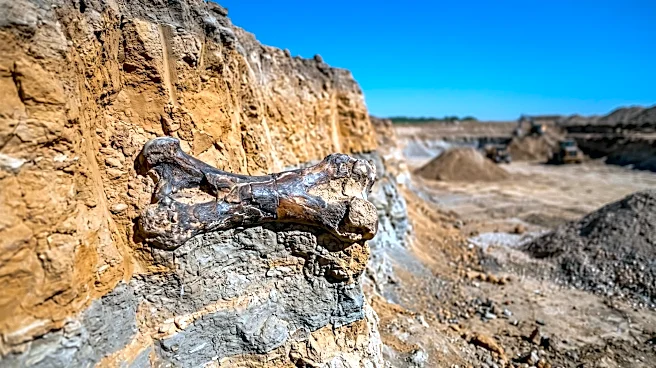
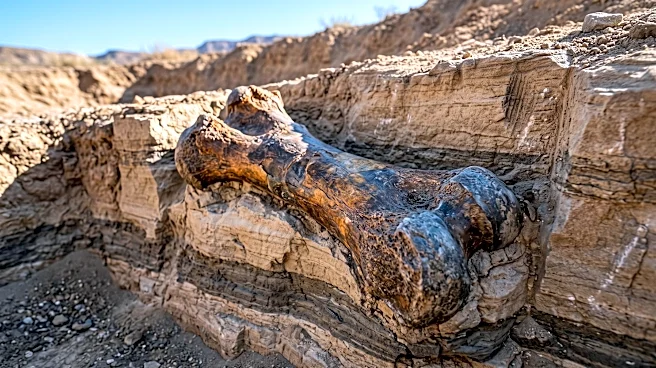
Dolly the mastodon, whose partially exposed bones were discovered in a Wayne County creek bed in 2022, has returned to southern Iowa for permanent display. State archaeologist John Doershuk and his team spent two years strengthening the skeleton to prepare
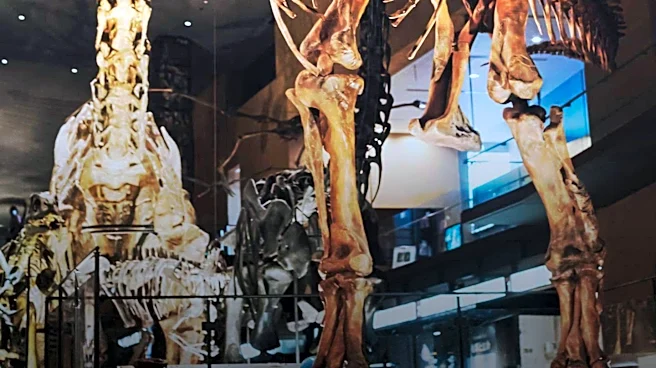
it for museum exhibition. This specimen is considered the most complete mastodon skeleton found in Iowa to date. The bones are estimated to be approximately 13,600 years old, which is relatively young in archaeological terms, meaning they are still bone rather than fossilized rock. Preservation techniques were crucial in making the fragile bones robust enough for public viewing. Brenda DeVore, the director of the Prairie Trails Museum in Wayne County, expressed excitement about Dolly's return, recalling her involvement in the initial dig. A ribbon-cutting ceremony for the new exhibit is scheduled for this Saturday at noon. Doershuk and DeVore shared these details during an appearance on the 'Talk of Iowa' program on Iowa Public Radio.
Why It's Important?
The return of Dolly the mastodon to Wayne County for permanent display at the Prairie Trails Museum holds significant cultural and educational importance for the region and the state of Iowa. This exhibit provides a unique opportunity for residents and visitors to engage directly with prehistoric natural history, offering insights into the ancient ecosystems that once thrived in the area. For local communities, it serves as a point of pride and a potential boost for local tourism, drawing interest to Wayne County. Academically, the mastodon skeleton, being the most complete found in Iowa, contributes valuable data to paleontological research, potentially informing studies on mastodon populations, their habitats, and the climate of the late Pleistocene epoch in the Midwest. The preservation efforts highlight advancements in archaeological conservation, ensuring that such delicate historical artifacts can be safely presented to the public for generations. This discovery also underscores the potential for further significant archaeological finds within Iowa, encouraging continued exploration and research.
What's Next?
The immediate next step is the ribbon-cutting ceremony for Dolly's new exhibit at the Prairie Trails Museum in Wayne County, scheduled for this Saturday at noon. Following the opening, the museum anticipates an increase in visitors, which could lead to enhanced educational programs and community engagement initiatives centered around the mastodon and local natural history. State archaeologist John Doershuk's comments about the potential for additional finds of this magnitude suggest that further archaeological explorations in Iowa may be encouraged, particularly in areas that have not yet been thoroughly investigated. This could lead to future discoveries that further enrich the state's understanding of its prehistoric past. The success of Dolly's preservation and display may also serve as a model for handling and exhibiting other significant archaeological finds in Iowa and neighboring states, potentially influencing future museum practices and conservation efforts.
Beyond the Headlines
The display of Dolly the mastodon transcends a simple museum exhibit, touching upon deeper themes of scientific discovery, community identity, and the human connection to the ancient past. The fact that Dolly's bones are still bone, not fossilized, offers a tangible link to a relatively recent prehistoric era, making the distant past feel more immediate and relatable. This distinction highlights the dynamic nature of geological and paleontological processes and challenges common perceptions of what constitutes a 'fossil.' Ethically, the careful preservation and respectful display of such remains underscore a commitment to stewardship of natural heritage, balancing scientific study with public accessibility. Culturally, Dolly's return can foster a renewed sense of local pride and ownership over historical narratives, potentially inspiring younger generations to pursue interests in science, archaeology, and conservation. The collaborative effort between state archaeologists and local museums also exemplifies how scientific expertise can be effectively integrated with community resources to achieve significant public benefit.