
What's Happening?
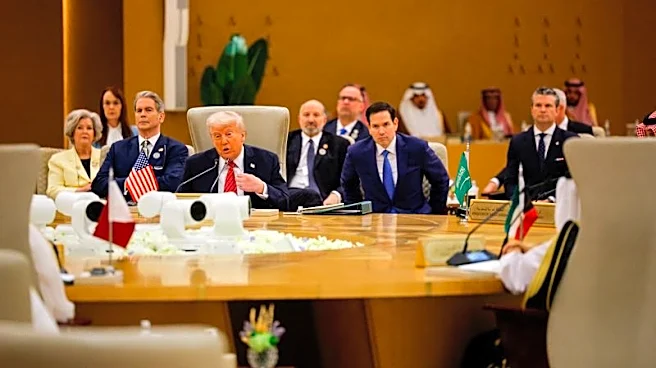
President Trump has approved a landmark nuclear agreement with Saudi Arabia, allowing the kingdom to develop a civilian nuclear program. The deal, expected to be signed by U.S. Energy Secretary Chris Wright,
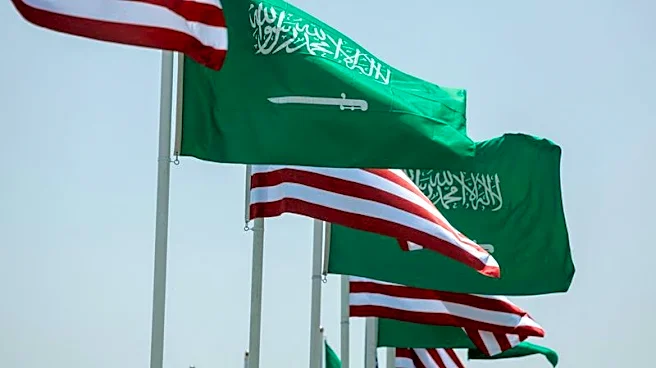
does not include the U.S.'s usual 'gold standard' constraints, which prohibit uranium enrichment and reprocessing. The agreement involves U.S. companies in developing Saudi Arabia's nuclear infrastructure and includes a provision for a joint study on uranium enrichment capabilities. The deal aims to strengthen U.S.-Saudi relations and counter Chinese and Russian influence in the region.
Why It's Important?
The agreement represents a significant shift in U.S. nuclear policy, as it allows for potential uranium enrichment in Saudi Arabia without the typical nonproliferation safeguards. This has raised concerns about the risk of nuclear proliferation in the Middle East, a region already fraught with geopolitical tensions. For the U.S., the deal offers economic opportunities and strengthens its strategic partnership with Saudi Arabia. However, it also poses challenges in terms of ensuring compliance with nonproliferation standards and maintaining regional stability.
What's Next?
The deal will be submitted to Congress for review, where it may face opposition from lawmakers concerned about proliferation risks. The outcome of this review will be crucial in determining the future of U.S.-Saudi nuclear cooperation. Additionally, the implementation of the agreement will require careful monitoring to ensure compliance with nonproliferation standards. The situation will require ongoing diplomatic engagement to address concerns and maintain regional stability.