




What's Happening?
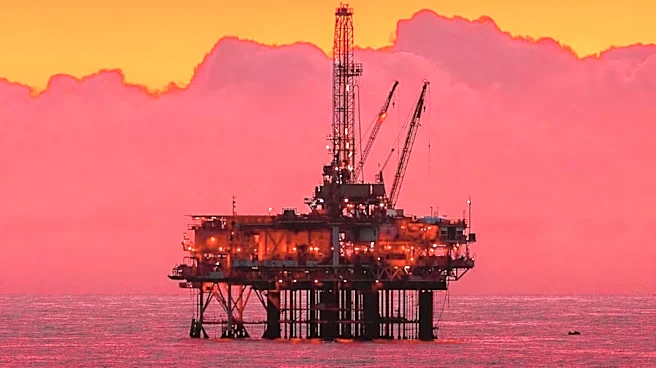
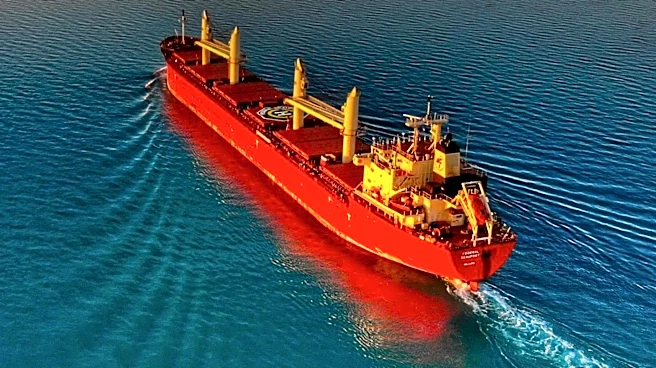
The oil-shuttling service through the Strait of Hormuz has resumed after a recent lull, allowing millions of barrels to be transported despite escalating hostilities in the Middle East. This service, crucial for moving oil out of the Persian Gulf, involves
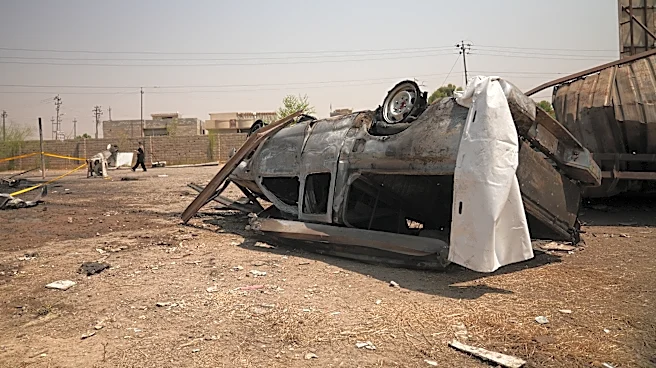
vessels ferrying supplies to other ships outside the waterway, often with transponders off to avoid detection. The trade had slowed earlier this month due to attacks on vessels and the unraveling of a ceasefire. However, recent days have seen a rebound, with shippers moving volumes close to pre-escalation levels. Satellite data indicates an increase in ship-to-ship transfers near the Omani port of Sohar, suggesting a pickup in oil flows.
Why It's Important?
The resumption of oil shuttling through Hormuz is significant for global oil markets, as the strait is a critical chokepoint for about a fifth of the world's oil supply. The ability to move oil despite regional tensions helps mitigate fears of a price spike, which had previously pushed oil prices back to $100 a barrel. The ongoing trade is vital for producers in the Gulf, who rely on these routes to reach international markets. The situation underscores the geopolitical risks in the region and the potential impact on global energy security.
What's Next?
The continuation of oil shuttling through Hormuz will depend on the stability of the region. Any further escalation in hostilities could disrupt these operations again, affecting global oil supply and prices. The U.S. military's involvement in escorting oil shipments through the strait highlights the strategic importance of maintaining open shipping lanes. Future developments in U.S.-Iran relations and regional conflicts will likely influence the security and efficiency of these oil transport routes.