





What's Happening?
A new artificial intelligence system named REDMOD has been developed to detect pancreatic cancer at a much earlier stage than currently possible with standard medical imaging. According to research published in the journal Gut, REDMOD can identify subtle
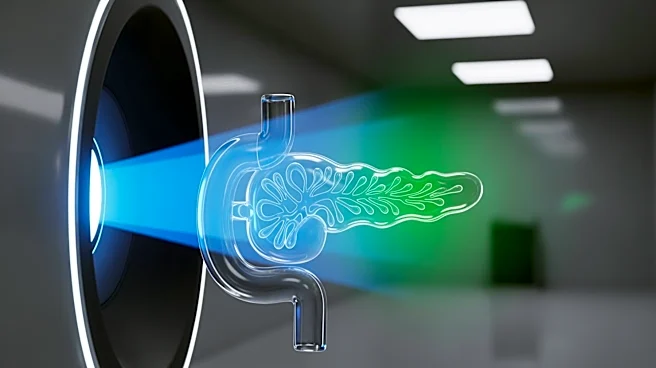
tissue changes associated with pancreatic ductal adenocarcinoma, the most common and deadliest form of pancreatic cancer. This AI system uses radiomics to detect patterns in tissue texture that are not visible on standard CT scans. The study involved testing REDMOD on abdominal CT scans from 219 patients who were initially considered disease-free but were later diagnosed with pancreatic cancer. The AI system was able to identify signs of cancer an average of 475 days before a clinical diagnosis was made. REDMOD outperformed experienced radiologists, showing nearly double the sensitivity in correctly identifying true positive cases.
Why It's Important?
The development of REDMOD is significant because pancreatic ductal adenocarcinoma is often diagnosed at an advanced stage, leading to a low survival rate. Early detection is crucial as it increases the likelihood of successful treatment. By identifying cancer at stage 0, REDMOD could shift the diagnosis from late-stage, often terminal discovery to much earlier detection, potentially doubling survival rates. This advancement could lead to a paradigm shift in how pancreatic cancer is diagnosed and treated, offering hope for improved outcomes. The AI system's ability to detect cancer earlier than traditional methods could significantly impact patient survival and healthcare costs by enabling earlier intervention.
What's Next?
Further testing of REDMOD is necessary before it can be widely implemented in clinical settings. The researchers emphasize the need for prospective validation to confirm its clinical utility. They also note the importance of testing the system in high-risk patients, such as those with unexplained weight loss or newly diagnosed diabetes. The study highlights the potential for REDMOD to become a standard tool in early cancer detection, but it must first undergo additional trials to ensure its effectiveness across diverse populations. The researchers acknowledge the current lack of ethnic diversity among study participants as a limitation that needs addressing in future studies.
Beyond the Headlines
The introduction of AI systems like REDMOD in medical diagnostics raises ethical and practical considerations. The reliance on AI for early cancer detection could lead to changes in how medical professionals are trained and how healthcare systems allocate resources. Additionally, the integration of AI in healthcare must address issues of data privacy and the potential for algorithmic bias. As AI becomes more prevalent in medical diagnostics, it is crucial to ensure that these technologies are accessible to all patients, regardless of socioeconomic status, to prevent disparities in healthcare outcomes.