



What's Happening?
A federal judge has decided not to issue a preliminary injunction to stop the immigration enforcement surge in Minnesota, as a lawsuit challenging the operation continues. The lawsuit, filed by Minnesota Attorney General Keith Ellison and the mayors of
Minneapolis and St. Paul, argues that the Department of Homeland Security's actions violate constitutional protections. The federal government, however, maintains that the operation, known as Operation Metro Surge, is necessary to remove criminal immigrants from the streets, citing hindrances from state and local 'sanctuary laws and policies.' The judge's decision was influenced by a recent ruling from the 8th U.S. Circuit Court of Appeals, which set aside limits on the use of force by immigration officers. Despite denying the injunction, the judge acknowledged the operation's significant impact on Minnesota residents, including reports of racial profiling and excessive force by federal agents.
Why It's Important?
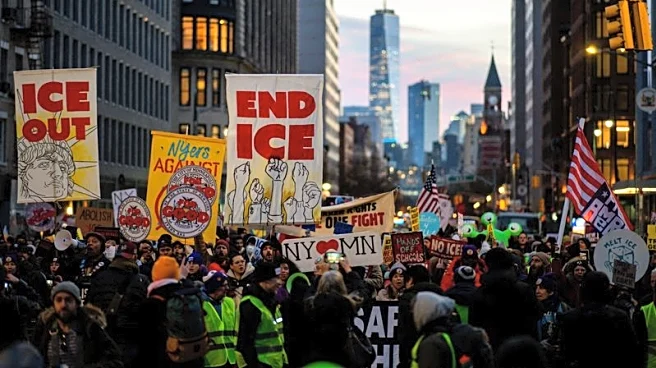
The decision to allow the immigration enforcement surge to continue has significant implications for federal-state relations and the ongoing debate over immigration policy in the U.S. The ruling underscores the tension between federal authority and state sovereignty, particularly in states with sanctuary policies. The operation has sparked protests and concerns about public safety and civil rights, with local officials arguing that it disrupts communities and strains local resources. The outcome of the lawsuit could set a precedent for how similar federal operations are conducted in other states, potentially affecting immigration enforcement strategies nationwide. The case also highlights the broader national discourse on immigration, federalism, and the balance of power between state and federal governments.
What's Next?
As the lawsuit progresses, Minnesota officials, including Attorney General Keith Ellison, plan to continue challenging the federal operation, citing constitutional concerns under the Tenth Amendment. The case is still in its early stages, and further legal battles are expected as both sides present their arguments. Meanwhile, protests and public demonstrations are likely to persist, reflecting ongoing community opposition to the federal presence. The Department of Homeland Security has expressed a willingness to collaborate with local law enforcement, but tensions remain high. The legal proceedings and public response will be closely watched as they unfold, potentially influencing future immigration policies and enforcement practices.