






What's Happening?
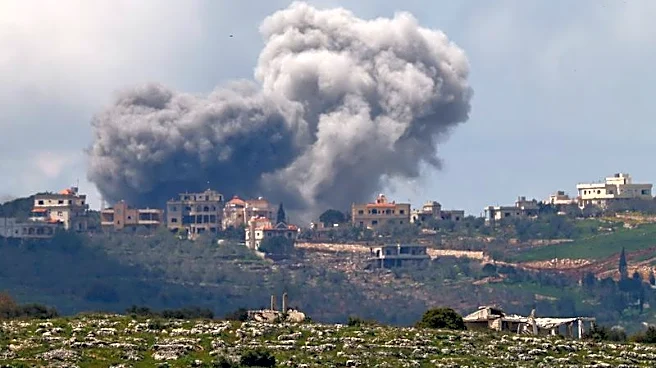
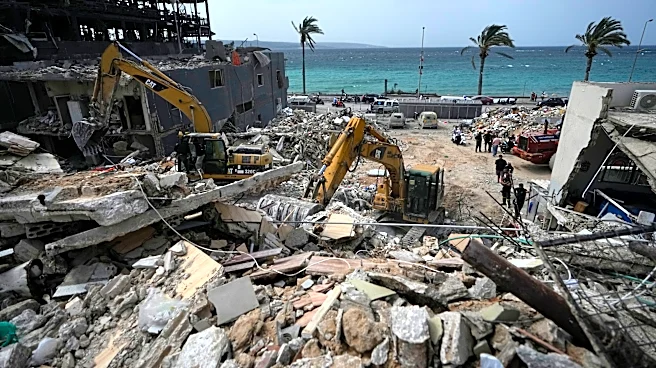
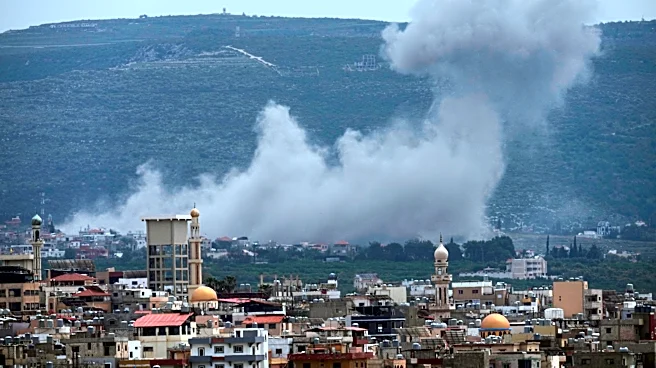
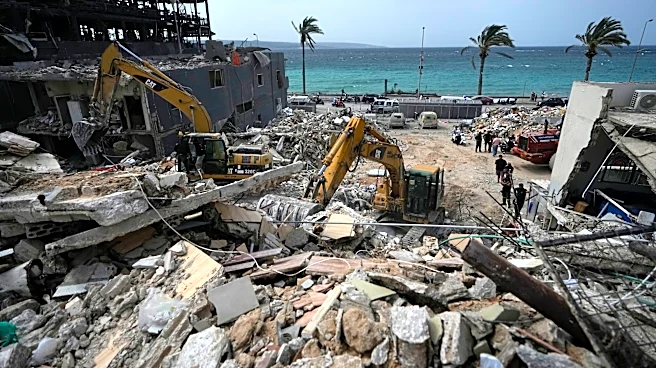
President Donald Trump announced that Israel and Lebanon have agreed to a 10-day ceasefire following six weeks of intense Israeli bombardment aimed at Hezbollah, a militant group. The ceasefire is seen as a significant step towards peace in the region,
which has been marred by violence and instability. The agreement comes after extensive diplomatic efforts and is expected to pave the way for further negotiations between the two nations. The ceasefire aims to halt the hostilities temporarily, allowing for humanitarian aid and potential discussions for a more permanent resolution.
Why It's Important?
The ceasefire between Israel and Lebanon is crucial as it temporarily halts the violence that has affected civilians and disrupted daily life in the region. It provides a window for humanitarian aid to reach affected areas and offers a chance for diplomatic negotiations to progress. The agreement could lead to a more stable geopolitical environment in the Middle East, impacting global oil markets and international relations. Stakeholders such as the United States and other Western nations may see this as an opportunity to push for a lasting peace agreement, potentially reducing military expenditures and fostering economic growth in the region.
What's Next?
The next steps involve monitoring the ceasefire's adherence and facilitating diplomatic talks aimed at a long-term peace agreement. International observers and peacekeeping forces may be deployed to ensure compliance. Political leaders from both nations are expected to engage in discussions to address underlying issues and seek a sustainable resolution. The international community, including the United Nations, may play a role in mediating these talks and providing support for rebuilding efforts in affected areas.