



What's Happening?
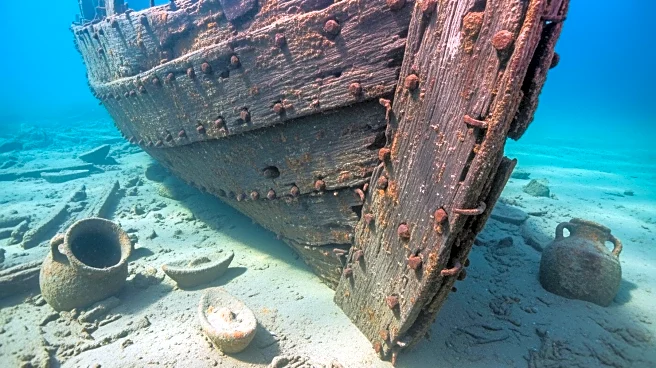
A team of archaeologists from the Viking Ship Museum in Denmark has uncovered the largest medieval European cargo ship ever found. The discovery was made during site investigations for the construction of Lynetteholm, a manmade island near Copenhagen.
The ship, named Svaelget 2, is a 'cog' dating back to the early 1400s, measuring approximately 100 feet long and 30 feet wide. Although no cargo was found, personal effects from the crew were present. The ship's construction materials, including planking from Poland and ribs from the Netherlands, suggest it was built in a Dutch shipyard. The vessel's size and capacity indicate it was used for long-distance trade, transporting goods like salt, timber, and food items across the North Sea and Baltic ports.
Why It's Important?
This discovery provides significant insights into medieval maritime trade and shipbuilding techniques. The size of the cog demonstrates the scale of trade during the era, highlighting the importance of maritime routes in the economic development of Europe. The ship's construction using materials from different regions underscores the interconnectedness of European economies even in the 1400s. The preservation of the wreck, including parts of the rigging and a deckhouse, offers a rare glimpse into the living conditions and technological advancements of the time. This find not only enriches historical knowledge but also emphasizes the role of maritime archaeology in understanding past civilizations.
What's Next?
Further analysis and preservation efforts are likely to follow, as researchers aim to uncover more details about the ship's construction and use. The findings could lead to new exhibitions at the Viking Ship Museum, enhancing public understanding of medieval maritime history. Additionally, the discovery may prompt further archaeological investigations in the region, potentially revealing more about the trade networks and cultural exchanges of the period.
Beyond the Headlines
The discovery of Svaelget 2 could influence modern perspectives on historical trade and globalization. It highlights the advanced shipbuilding techniques of the time and the strategic importance of maritime routes in shaping economic and cultural landscapes. This find may also inspire renewed interest in preserving underwater archaeological sites, which are crucial for piecing together historical narratives.