



What's Happening?
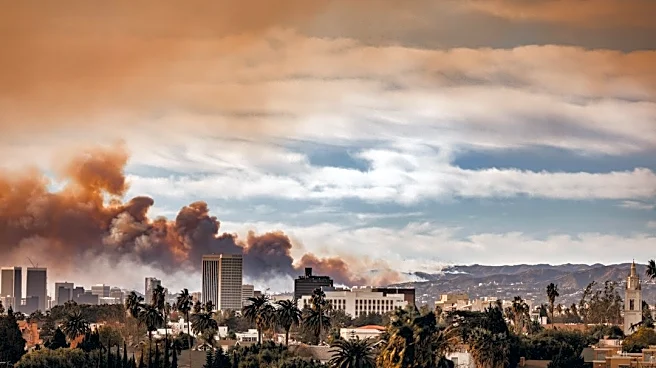
Southern California is facing a heightened risk of wildfires as strong Santa Ana winds are expected to sweep through the region. A brush fire already broke out in Brentwood, near the Department of Veterans Affairs’ West Los Angeles campus, burning approximately
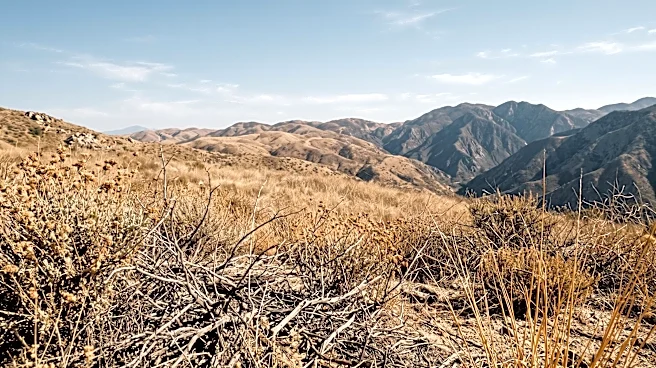
1.5 acres before firefighters contained it. No structures were damaged, and no injuries were reported. The National Weather Service has issued red flag warnings for most of Los Angeles and Ventura counties, effective Thursday and Friday. Meteorologist Ryan Kittell from the National Weather Service in Oxnard stated that sustained winds of 20 to 40 mph, with gusts up to 60 mph, are anticipated across large areas of Southern California, potentially reaching 70 mph in mountainous regions. These winds, combined with low humidity (5% to 15%) and high temperatures (85 to 95 degrees), create a critical fire danger. Daniel Swain, a UC Agriculture and Natural Resources climate scientist, noted that areas west of the 405 Freeway are particularly vulnerable due to minimal recent rainfall and a record-breaking heatwave in early October, unlike areas east of the 405 that received some precipitation from post-Tropical Storm Rachel.
Why It's Important?
The impending Santa Ana winds and dry conditions pose a significant threat to communities across Southern California, potentially leading to widespread wildfires. This situation necessitates public safety power shutoffs, with Southern California Edison considering outages for over 220,000 customers in Kern, Los Angeles, Santa Barbara, Tulare, and Ventura counties, representing about 4.5% of its total customer base. Pacific Gas and Electric is also contemplating similar measures in dozens of counties. Such shutoffs, while aimed at preventing fires caused by downed power lines, can disrupt daily life, impact businesses, and create challenges for residents, especially those without air conditioning in coastal areas where high temperatures are expected. The economic impact of potential wildfires includes property damage, displacement, and significant costs associated with firefighting efforts and recovery. The recurring nature of these fire risks highlights the ongoing challenges posed by climate patterns and the need for robust infrastructure and emergency preparedness in the region.
What's Next?
Red flag warnings are in effect for most of Los Angeles and Ventura counties from Thursday through Friday, indicating a critical period for fire danger. Residents in affected areas should prepare for potential public safety power shutoffs, as utility companies like Southern California Edison and Pacific Gas and Electric are actively considering these measures to mitigate wildfire risks. Emergency services will remain on high alert, ready to respond to any new fire outbreaks. The cause of the recent Brentwood brush fire is currently under investigation. Authorities will continue to monitor weather conditions closely, and residents are advised to avoid any activities that could create sparks, secure outdoor decorations, and stay hydrated. The long-term outlook involves ongoing efforts to manage vegetation, improve early detection systems, and enhance community preparedness for future fire seasons, which are increasingly influenced by climate phenomena.
Beyond the Headlines
The recurring threat of wildfires in Southern California, exacerbated by phenomena like Santa Ana winds and dry conditions, underscores broader environmental and societal challenges. The practice of public safety power shutoffs, while a preventative measure, highlights the vulnerability of critical infrastructure to natural hazards and raises questions about energy resilience and grid modernization. The differential impact of recent rainfall, with areas west of the 405 Freeway remaining dry, points to localized climate variations and the need for tailored mitigation strategies. Furthermore, the ongoing battle against wildfires has significant implications for public health due to smoke inhalation and for the region's natural ecosystems. The situation also brings to light the complex interplay between urban development, wildland-urban interface management, and the increasing frequency and intensity of extreme weather events, prompting discussions on sustainable land use and climate adaptation policies.