





What's Happening?
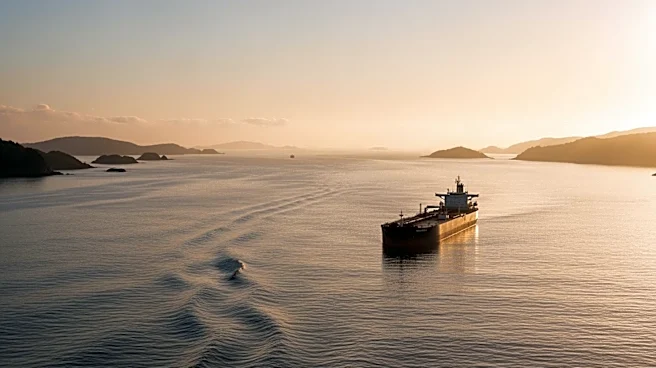
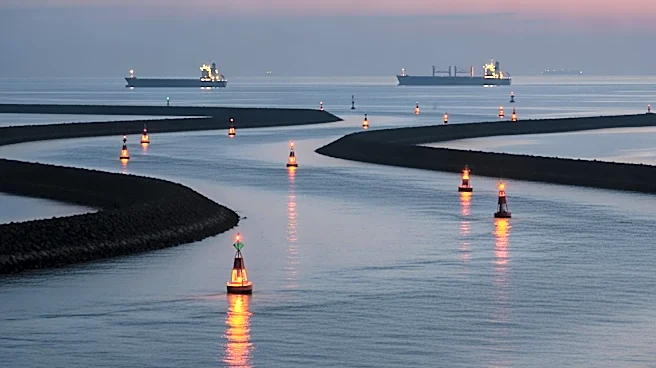
The US-Iran ceasefire has not restored normal shipping through the Strait of Hormuz, a critical oil chokepoint. Traffic remains minimal, with vessels required to coordinate with Iranian forces for passage. Shipping is dominated by smaller operators, as major
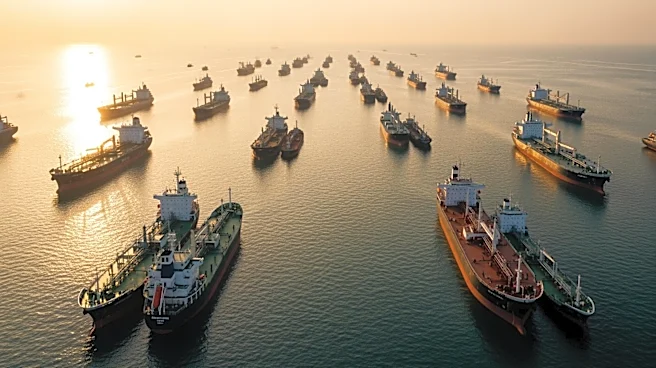
firms stay away due to undefined transit conditions and potential sanctions risks. The situation has left thousands of vessels stranded, impacting global energy supply chains. Sultan Al Jaber, CEO of Abu Dhabi National Oil Company, warns that restricted access could deepen the global supply crunch, with significant energy flows at risk.
Why It's Important?
The Strait of Hormuz is vital for global energy trade, and its closure can have significant economic implications. Iran's control over the strait and the lack of clear transit conditions challenge international norms, potentially leading to increased shipping costs and delays. The situation highlights the fragile nature of the ceasefire and the broader geopolitical tensions in the region. The uncertainty affects global energy markets, with potential repercussions for countries reliant on Middle Eastern oil and gas.
What's Next?
The international community may seek diplomatic solutions to ensure safe passage through the Strait of Hormuz and address Iran's unilateral actions. Stakeholders, including shipping companies and governments, are likely to engage in negotiations to resolve the impasse and restore normal shipping operations. The ongoing geopolitical tensions could lead to further confrontations or diplomatic efforts, impacting regional stability and global energy markets.