
What's Happening?
Iran is set to unveil a plan to manage traffic through the Strait of Hormuz, which includes charging tolls, as tensions with the United States escalate. Iranian First Vice President Mohammad Reza Aref
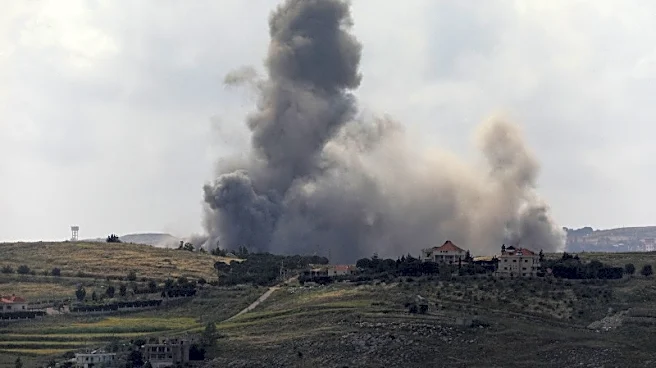
announced that Iran will no longer permit 'enemy' military equipment to pass through the strait. This development comes as President Trump warns Iran of severe consequences if a peace deal is not reached soon. Meanwhile, Israel continues its military operations in southern Lebanon, with recent airstrikes following a fragile ceasefire agreement. The situation in the region remains tense, with Iran's strategic moves in the Strait of Hormuz potentially impacting global oil supply routes.
Why It's Important?
The Strait of Hormuz is a critical chokepoint for global oil transportation, and Iran's decision to impose tolls could have significant economic implications. This move may increase tensions between Iran and Western countries, particularly the United States, which relies on the strait for oil imports. The potential for increased military confrontations in the region could disrupt global oil markets, leading to higher prices and economic instability. Additionally, the ongoing conflict between Israel and Lebanon adds another layer of complexity to the geopolitical landscape, with potential repercussions for regional security and international diplomatic efforts.
What's Next?
Iran's announcement is likely to provoke responses from major global powers, particularly those with vested interests in the region's stability. The United States and its allies may seek diplomatic or military measures to counter Iran's actions. The international community will be closely monitoring the situation, as any escalation could have far-reaching consequences for global trade and security. Furthermore, the ongoing conflict between Israel and Lebanon may see further developments, with potential impacts on peace negotiations and regional alliances.