




What's Happening?
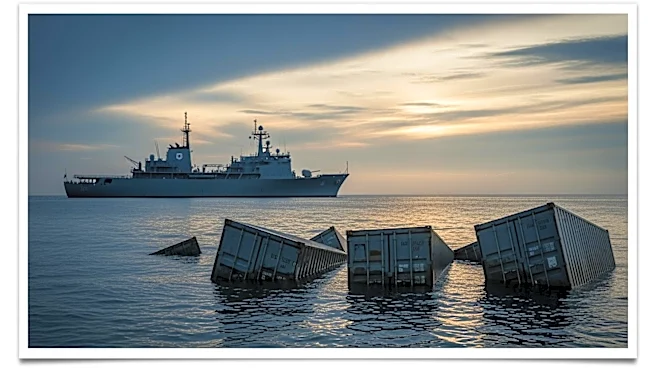
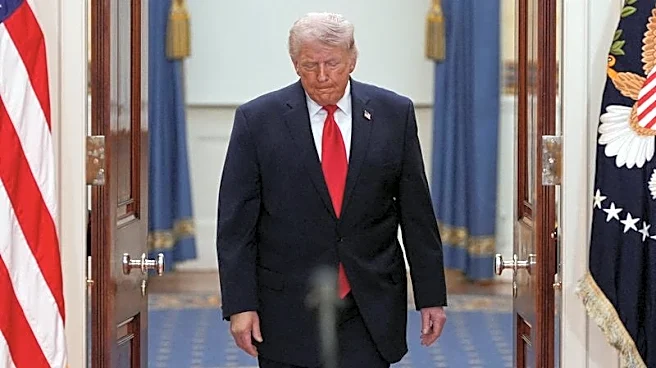
The United States has commenced a blockade of the Strait of Hormuz, a critical oil passage, as part of its strategy to pressure Iran into reopening the route. This action was announced by President Trump via his social media platform, Truth Social, stating
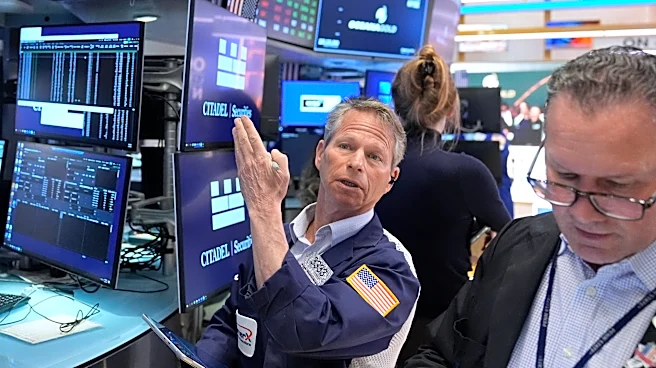
that the U.S. Navy would block any ships attempting to enter or exit the strait. The blockade follows unsuccessful negotiations between Washington and Tehran over the weekend, aimed at resolving ongoing Middle East conflicts. The move has led to a surge in crude oil prices, exceeding $100 a barrel, and has negatively impacted European stock markets, particularly travel and leisure sectors, due to concerns over jet fuel supply.
Why It's Important?
The blockade of the Strait of Hormuz by the U.S. Navy is significant due to its potential to disrupt global oil supply, affecting energy prices worldwide. The strait is a vital passage for oil shipments, and its closure could lead to increased costs for industries reliant on oil, such as transportation and manufacturing. European markets have already reacted negatively, with stocks in travel and leisure sectors experiencing declines. Additionally, the blockade could escalate geopolitical tensions, particularly if other countries become involved or if Iran retaliates. The situation also poses a risk to international relations, as President Trump has threatened China with tariffs should it support Iran militarily.
What's Next?
The blockade is likely to continue until Iran agrees to reopen the Strait of Hormuz, but the timeline for resolution remains uncertain. The U.S. may seek support from other nations to enforce the blockade, potentially leading to broader international involvement. Iran's response to the blockade could further impact global oil markets and geopolitical stability. Additionally, President Trump's threats of tariffs against China could lead to increased trade tensions, affecting global economic relations. Stakeholders, including oil companies and international governments, will be closely monitoring developments to assess the impact on energy supply and diplomatic relations.
Beyond the Headlines
The blockade of the Strait of Hormuz raises ethical and legal questions regarding the use of military force to influence international trade routes. The action could set a precedent for future conflicts over strategic passages, impacting global trade norms. Furthermore, the situation highlights the vulnerability of global energy markets to geopolitical events, emphasizing the need for diversified energy sources and strategies to mitigate such risks. The blockade also underscores the complex interplay between military actions and economic policies, as nations navigate the balance between national security and economic stability.