
What's Happening?
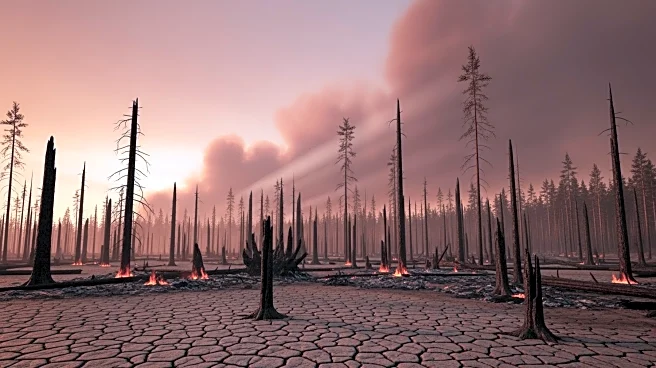
Wildfires have erupted across central and southern Chile, resulting in at least 15 fatalities and the destruction of thousands of acres of forest and numerous homes. The fires have been exacerbated by
a severe heat wave, with temperatures soaring above 100°F. In response, Chilean President Gabriel Boric has declared a state of catastrophe in the Biobio and Ñuble regions, which are located approximately 300 miles south of Santiago. This declaration allows for enhanced coordination with the military to combat the fires, which have already led to the evacuation of 50,000 people. Despite these efforts, local officials have expressed frustration over the lack of immediate federal assistance, as the fires continue to spread rapidly, fueled by strong winds and high temperatures.
Why It's Important?
The wildfires in Chile highlight the increasing frequency and intensity of natural disasters linked to climate change, which have significant implications for global environmental policies and emergency response strategies. The situation underscores the urgent need for effective disaster management and climate adaptation measures. The fires not only pose immediate threats to human life and property but also have long-term environmental impacts, including loss of biodiversity and increased carbon emissions. The international community may need to consider more robust support mechanisms for countries facing similar climate-induced challenges.
What's Next?
As the fires continue to rage, the Chilean government is likely to intensify its efforts to control the situation, potentially seeking international assistance if the crisis worsens. The military's involvement is expected to increase, with more resources being allocated to firefighting and evacuation operations. In the aftermath, there will likely be a comprehensive assessment of the damage and a push for rebuilding efforts. Additionally, this disaster may prompt Chile and other nations to reevaluate their climate policies and disaster preparedness plans to better address future risks.
Beyond the Headlines
The wildfires in Chile may serve as a catalyst for broader discussions on climate justice, particularly concerning the disproportionate impact of climate change on vulnerable communities. The event could also influence global climate negotiations, emphasizing the need for equitable resource distribution and support for countries most affected by climate-related disasters. Furthermore, the fires may lead to increased scrutiny of land management practices and the role of human activity in exacerbating natural disasters.