







What's Happening?
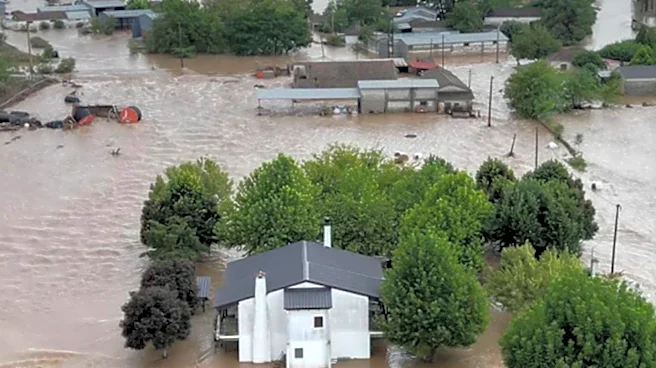
Southwestern Colorado has experienced widespread devastation following two historic floods within a week, impacting communities across the Four Corners region, including Pagosa Springs, Durango, and Archuleta County. Photojournalist Cheney Orr, with The
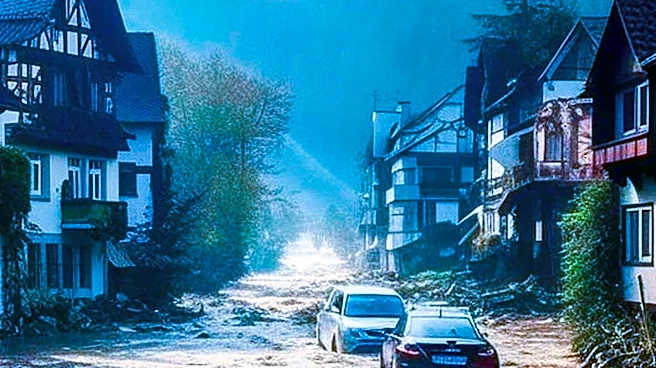
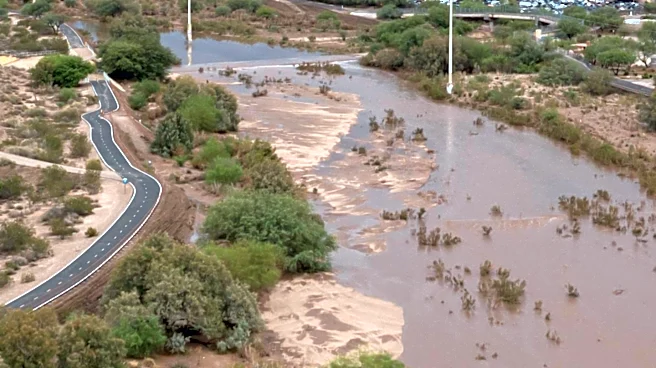
Colorado Sun through Report for America, documented the aftermath during a flyover with the Colorado National Guard. Aerial photographs reveal rivers carving new channels, washed-away roads and bridges, inundated homes and businesses, and landscapes covered in mud and debris. The destruction is extensive, with images showing homes teetering over river edges, flooded trailer parks, and overturned vehicles. Residents are now beginning the challenging process of assessing their losses and initiating rebuilding efforts.
Why It's Important?
The historic flooding in Southwestern Colorado carries significant implications for the affected communities and the broader region. The destruction of infrastructure, including roads and bridges, disrupts transportation and access, hindering emergency services and long-term recovery. The inundation of homes and businesses leads to substantial financial losses for residents and local economies, potentially displacing families and causing business closures. The environmental impact, with new river channels and widespread mud and debris, will require extensive cleanup and restoration efforts. The repeated nature of these 'historic' floods within a short period also raises concerns about climate patterns and the need for more resilient infrastructure and disaster preparedness in vulnerable areas across the U.S.
What's Next?
Following the immediate devastation, the focus for Southwestern Colorado will shift to long-term recovery and rebuilding. Residents face the daunting task of assessing damages, filing insurance claims, and securing aid for reconstruction. Local and state authorities, potentially with federal assistance, will need to coordinate extensive cleanup operations and begin repairing critical infrastructure like roads and bridges. There will likely be discussions and initiatives aimed at improving flood defenses and urban planning to mitigate the impact of future extreme weather events. The experience may also prompt a review of emergency response protocols and community preparedness strategies to better protect residents and property in the face of increasingly frequent and severe natural disasters.
Beyond the Headlines
The back-to-back historic floods in Southwestern Colorado highlight deeper issues beyond immediate physical damage. The frequency and intensity of such events raise questions about the long-term effects of climate change on regional weather patterns and the vulnerability of communities built in flood-prone areas. This situation could prompt a re-evaluation of land use policies, building codes, and infrastructure development in similar regions across the U.S. There may also be a psychological toll on residents who have endured repeated disasters, leading to increased stress and displacement. The event underscores the critical need for comprehensive, forward-looking strategies that integrate climate resilience into all aspects of community planning and development, moving beyond reactive disaster response to proactive risk reduction.