







What's Happening?
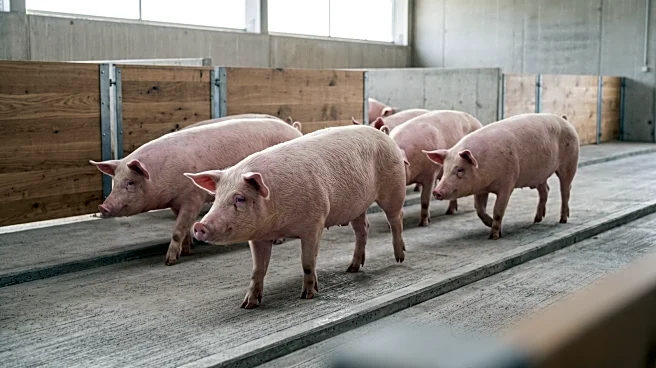
A new study published in Smart Agricultural Technology details a re-identification framework that successfully tracks individual untagged pigs over an 18-day period. Led by Gytis Bernotas and colleagues, the research achieved a mean daily recognition
accuracy of 88.0% for 12 visually uniform pigs, a significant improvement from a conventional baseline of 54.6%. This system addresses a key challenge in precision livestock farming, where continuous, automated monitoring of individual animals is often hindered by the lack of physical tags on commercial market pigs. The framework utilizes a ResNet50 network with deep metric learning and a dynamic multi-anchor voting algorithm to counter embedding drift, allowing for long-term tracking without relying on ear tags, RFID anchors, or painted marks. The study also found that synthetic dirt augmentation during training was crucial for maintaining accuracy, preventing the system from misinterpreting transient dirt as identity cues.
Why It's Important?
This development is crucial for the U.S. livestock industry, particularly in commercial pig farming, as it offers a method for continuous individual animal monitoring without the labor burden and welfare concerns associated with physical tags. The ability to track untagged pigs can provide valuable insights into individual animal health, behavior, and growth patterns, which group-level data often misses. Early detection of health or welfare problems through small behavioral deviations can lead to more timely interventions, potentially reducing disease spread and improving animal well-being. For U.S. farmers, this technology could optimize resource allocation, enhance productivity, and contribute to more sustainable and ethical farming practices by allowing for more precise management of livestock. The removal of physical tags also eliminates potential data loss and discomfort for the animals, aligning with growing consumer demand for improved animal welfare.
What's Next?
Future research will focus on extending this AI approach to a wider range of postures, different farm environments, and integrating it with deployable short-term tracking systems. The current study was conducted in a controlled research facility with a limited number of evaluation groups, so validating its robustness across various inter-farm, inter-breed, and inter-camera conditions is a critical next step. Additionally, exploring its performance under different lighting conditions, such as infrared lighting common in commercial barns, will be necessary for broader adoption. The development of unsupervised enrollment methods that do not require manual cluster counting for identity establishment will also be vital for practical implementation. As the technology matures, it could lead to commercially available systems that offer continuous, tagless monitoring solutions for U.S. livestock producers, potentially transforming precision agriculture practices.
Beyond the Headlines
The broader implications of this AI technology extend beyond immediate farm management. The ability to accurately identify and track individual animals without physical intervention raises ethical considerations regarding animal privacy and the potential for over-surveillance, though the primary goal is welfare improvement. Legally, the data collected by such systems could be used for compliance with animal welfare regulations or for traceability in the food supply chain. Culturally, this innovation represents a shift towards more data-driven and technologically advanced agricultural practices, potentially influencing public perception of farming. The success of this system in overcoming challenges like visual uniformity and transient environmental factors (like dirt) also highlights the increasing sophistication of computer vision and deep learning in real-world, dynamic environments, paving the way for similar applications in other complex biological monitoring scenarios.