





What's Happening?
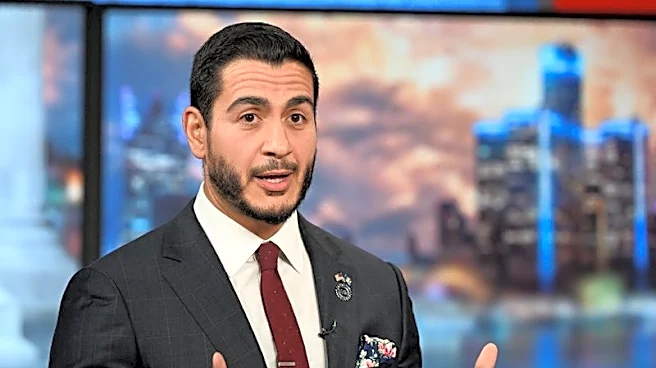
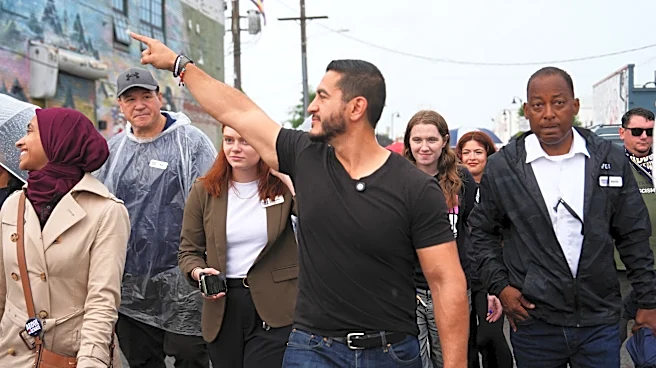
In the Michigan Democratic Senate primary, Abdul El-Sayed, a former public health official, is leading against centrist Rep. Haley Stevens. Recent polls indicate El-Sayed has an average lead of 11 percentage points over Stevens. This shift follows the exit
of moderate state Sen. Mallory McMorrow from the race. El-Sayed's campaign has gained momentum with endorsements from prominent figures like Rep. Alexandria Ocasio-Cortez and Sen. Bernie Sanders, as well as support from major unions such as the United Auto Workers. Stevens, on the other hand, has backing from The Detroit News and Democratic establishment figures, including Gov. Gretchen Whitmer. Despite Stevens' previous electoral successes, her campaign has struggled to maintain its initial advantage.
Why It's Important?
The outcome of this primary is significant as it could determine the Democratic strategy in a key Senate race. El-Sayed's progressive platform, including Medicare for All, contrasts with Stevens' centrist approach, which emphasizes electability. The primary results could influence the Democratic Party's direction in Michigan, a state with a history of close elections. A victory for El-Sayed might energize the progressive base, while a win for Stevens could appeal to moderate voters. The race also reflects broader national trends within the Democratic Party, where debates between progressive and centrist factions continue to shape electoral strategies.
What's Next?
The primary election will determine which candidate will face Republican front-runner Mike Rogers in the general election. Both El-Sayed and Stevens are polling closely against Rogers, suggesting a competitive race ahead. The Democratic nominee will need to unify the party's factions to secure a victory in November. The general election will test the appeal of progressive policies in a state that has swung between parties in recent elections. The outcome could have implications for future Democratic strategies in similar battleground states.