


What's Happening?
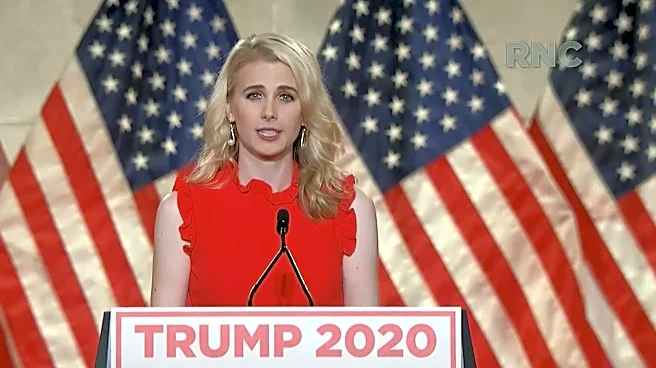
Intimate letters written by White House aide Natalie Harp to President Trump have been published by The Daily Beast, shedding light on the nature of their relationship. The letters, obtained by Trump biographer Michael Wolff, reveal Harp expressing deep
devotion and a desire to please President Trump. In one letter, Harp apologizes for upsetting him, stating, 'I want things to always be right between us. I never want to bring you anything but joy.' She also expressed a fear of being 'lowered in your eyes and good opinion' and referred to President Trump as her 'Guardian and Protector.' Another letter thanked him for a golf trip to Scotland and included a plea for him to 'punish' her or 'cuss me out' when she 'deserves it.' These revelations follow Senator Jon Ossoff's recent comments questioning the amount of time President Trump and Harp spend together.
Why It's Important?
The publication of these letters is significant as it raises questions about the professional boundaries and dynamics within the White House and around President Trump. The highly personal and deferential tone of Harp's letters, particularly her requests for punishment, could be interpreted in various ways, potentially fueling speculation about the nature of their relationship beyond a typical professional one. This situation could impact public perception of President Trump's inner circle and the conduct of his staff. It also highlights the intense loyalty and personal devotion often observed among President Trump's aides, which can be both a strength and a source of controversy. The scrutiny from figures like Senator Ossoff indicates that the relationship between President Trump and his aides is a subject of public and political interest, potentially influencing narratives around his leadership and decision-making.
What's Next?
The release of these letters is likely to generate further discussion and scrutiny regarding President Trump's relationships with his staff. Media outlets and political commentators may continue to analyze the implications of such personal communications within a professional political context. There could be increased public and political pressure for transparency regarding the roles and interactions of individuals within President Trump's orbit. While the White House has previously argued that Harp is not a public figure, the content of these letters may challenge that assertion and lead to more questions about accountability and appropriate conduct for political aides. The revelations could also influence public opinion, particularly among those who are already critical of President Trump's leadership style and the loyalty he commands from his staff.
Beyond the Headlines
Beyond the immediate political implications, these letters touch upon deeper themes of power dynamics, loyalty, and personal devotion within high-stakes political environments. The language used by Harp, particularly her self-deprecating remarks and requests for 'punishment,' could be analyzed through psychological and sociological lenses to understand the pressures and expectations placed on individuals working closely with powerful figures. The situation also raises ethical considerations about the boundaries between personal and professional relationships in public service, and how such dynamics can influence governance and public trust. The brother's comment about an 'unhealthy obsession' further complicates the narrative, suggesting potential psychological dimensions to the relationship. This event contributes to a broader understanding of the unique culture and interpersonal dynamics that have often characterized President Trump's political career.