



What's Happening?
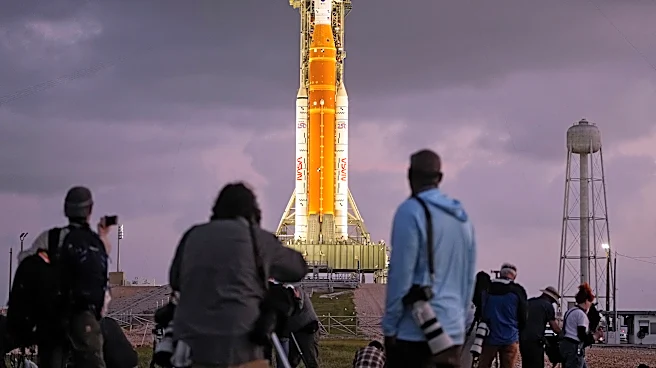
NASA has successfully launched the Artemis II mission, marking a significant milestone in its deep space exploration program. The mission involves sending four astronauts on a historic flight around the Moon, the first crewed launch under the Artemis program. The Space
Launch System (SLS) rocket lifted off from Kennedy Space Center in Florida, carrying NASA astronauts Reid Wiseman, Victor Glover, Christina Koch, and Canadian Space Agency astronaut Jeremy Hansen aboard the Orion spacecraft. The mission aims to test key systems required for future deep space expeditions and is expected to last about 10 days, during which the crew will perform a lunar flyby.
Why It's Important?
The Artemis II mission is crucial for NASA's long-term goals of establishing a sustainable human presence on the Moon and preparing for crewed missions to Mars. This mission builds on the legacy of the Apollo program, which first landed humans on the Moon in 1969. By reviving lunar exploration, NASA aims to transition from one-off expeditions to long-term exploration involving international partners and private companies. The success of Artemis II will pave the way for future lunar landings and further expansion into the Solar System, potentially benefiting scientific research and international collaboration.
What's Next?
Following the Artemis II mission, NASA plans to continue its efforts to establish a sustainable presence on the Moon. Future missions will focus on developing technologies for long-duration missions and preparing for crewed flights to Mars. The Artemis program's success could lead to increased collaboration with international partners and private companies, further advancing human exploration of space. Stakeholders in the space industry and scientific community will likely monitor the mission's outcomes closely, as they could influence future investments and policy decisions.
Beyond the Headlines
The Artemis program represents a shift in NASA's strategy from short-term missions to long-term exploration. This approach could have ethical and cultural implications, as it involves collaboration with international partners and private companies. The program's success may inspire a new generation of scientists and engineers, fostering innovation and interest in space exploration. Additionally, the mission could influence public perception of space travel, highlighting the potential for human expansion beyond Earth.