





What's Happening?
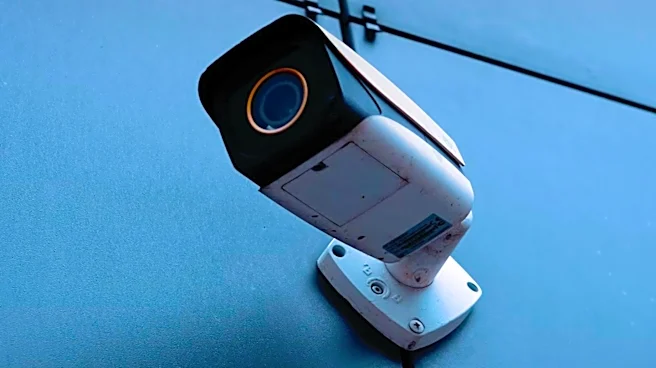
The Franklin County Sheriff’s Office in Illinois has installed a new health monitoring system for inmates at the Franklin County Jail. This state-of-the-art technology utilizes ultra-wideband radar to continuously track an inmate’s heart rate, respiratory
rate, and motion. Crucially, this system operates without requiring wearable devices or direct physical contact from staff. The device has been placed in a medical holding cell, aiming to enhance the safety and care provided to incarcerated individuals. Sheriff Kyle Bacon emphasized that this system adds an extra layer of protection for both inmates and jail staff, particularly for those with pre-existing conditions like heart issues or sleep disorders. The implementation of this technology was made possible through state-issued grant funding, with the device costing $7,500.
Why It's Important?
This new medical monitoring system represents a significant advancement in inmate care within correctional facilities. County jails are increasingly facing demands to provide higher levels of medical care due to the chronic health conditions prevalent among incarcerated populations. The ability to continuously monitor vital signs without physical contact addresses several critical challenges. It reduces the risk of direct confrontation or injury to staff during medical checks, especially with potentially uncooperative or volatile inmates. Furthermore, it allows for the early detection of medical emergencies, enabling a more timely response that could be life-saving. This proactive approach to health monitoring can lead to better health outcomes for inmates and potentially reduce liability for correctional facilities by demonstrating a commitment to adequate medical care. The use of non-contact technology also respects inmate privacy to a degree, as it avoids the need for physical interaction for basic health checks.
What's Next?
The Franklin County Sheriff's Office will likely continue to evaluate the effectiveness of this new ultra-wideband radar monitoring system in improving inmate health outcomes and operational efficiency. If successful, this technology could serve as a model for other correctional facilities across the U.S. facing similar challenges in providing medical care to incarcerated individuals. The Sheriff's Office may explore expanding the deployment of such systems to more cells or integrating the data with existing medical records systems to create a more comprehensive health profile for inmates. Other counties and states, observing the benefits in Franklin County, might seek similar grant funding or allocate resources to adopt comparable non-contact health monitoring solutions. This could lead to a broader trend of technological adoption in correctional healthcare, potentially influencing policy and funding decisions at state and federal levels regarding inmate welfare and safety.
Beyond the Headlines
The adoption of non-contact medical monitoring technology in jails raises broader discussions about the intersection of technology, healthcare, and civil liberties within the carceral system. While the stated goal is improved inmate safety and staff protection, the continuous, non-consensual monitoring of individuals, even within a correctional setting, could spark debates about privacy rights and the potential for data misuse. The data collected, including heart rate, respiratory rate, and motion, could offer unprecedented insights into inmate behavior and health, but also presents ethical considerations regarding how this data is stored, accessed, and utilized. This technology could also contribute to a shift in the standard of care expected in correctional facilities, potentially setting a new benchmark for medical oversight. However, it also highlights the ongoing challenge of balancing security needs with the fundamental right to health and privacy for incarcerated populations, prompting a need for clear guidelines and oversight mechanisms.