



What's Happening?
Thermo Fisher Scientific's Orbitrap Isora workflow is revolutionizing isotope analysis by enabling direct, high-resolution measurements of isotopes and isotopologues from intact molecules. This advancement moves isotope ratio analysis beyond specialized
laboratories, making it more accessible for broader applications. The technology allows researchers to gain deeper insights into the origin, transformation, and pathways of compounds by studying isotopies from intact molecules. Unlike conventional isotope ratio mass spectrometry (IRMS), which often requires converting samples to a simple gas and losing molecular information, Orbitrap Isora maintains molecular integrity. This capability is particularly beneficial for detecting low-abundance isotopologues and measuring multiple isotopes in a single run, providing a richer picture of a compound’s history. The workflow also simplifies sample preparation through electrospray ionization, reducing the need for chemical conversion or derivatization for suitable analytes. This streamlined process aims to accelerate research across various scientific disciplines.
Why It's Important?
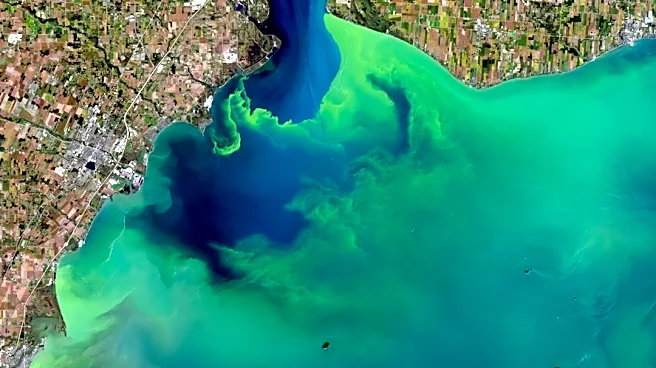
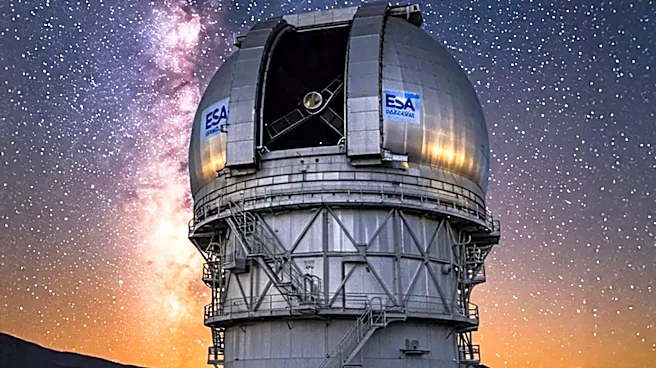
The increased accessibility and enhanced capabilities of molecular-level isotope analysis through the Orbitrap Isora workflow hold significant importance for U.S. industries, scientific research, and public policy. In environmental science, it can improve the tracing of contaminants like PFAS, helping to identify sources and understand their movement, which is crucial for environmental protection and regulatory efforts. For human health, this technology offers new avenues in metabolomics research, providing deeper insights into metabolic pathways, nutrient utilization, and disease-related metabolic changes. This could lead to advancements in diagnostics and personalized medicine. In food research, molecular isotope signatures can enhance authenticity verification and origin tracing, benefiting consumers and combating food fraud. The ability to analyze tiny fragments of samples, as demonstrated in meteorite research, also opens new possibilities for astrobiology and understanding the origins of life, potentially impacting U.S. space exploration and scientific funding priorities. Overall, this technology provides a more comprehensive analytical dimension alongside traditional concentration measurements and molecular identification, fostering a richer understanding of complex systems.
What's Next?
Over the next three to five years, molecular-level isotope analysis is expected to create significant scientific and societal impact, particularly in human health, sustainability, food security, and environmental research. In metabolomics and human health, combining metabolite abundance with natural isotope patterns will offer a more comprehensive view of metabolic processes, potentially leading to new discoveries in disease mechanisms and therapeutic targets. For food research, the integration of molecular isotope information with existing analytical methods will strengthen efforts in verifying origin, authenticity, and nutritional value. The streamlined workflow of Orbitrap Isora, which reduces analysis time from days to hours, will enable researchers to design broader experiments with larger sample sets, more replicates, and extensive time points. This will facilitate more systematic and extensive use of isotope information across various studies, allowing researchers to focus more on interpreting complex isotopic patterns. Continued research in environmental forensics, such as PFAS contamination, will build upon the foundation laid by Orbitrap-based methods, providing stronger evidence for source attribution and environmental investigations.
Beyond the Headlines
The Orbitrap Isora workflow's ability to analyze isotopic fingerprints at a molecular level has profound implications beyond immediate scientific applications. Ethically, it raises questions about the precision of attribution in environmental contamination cases, potentially leading to more accurate identification of polluters and fairer legal outcomes. Culturally, the technology's contribution to astrobiology, particularly in analyzing extraterrestrial organics from meteorites, could reshape our understanding of the universe and the origins of life, influencing philosophical and scientific discourse. The shift from specialized laboratories to broader research communities democratizes access to advanced analytical tools, fostering interdisciplinary collaboration and accelerating scientific discovery. This could lead to a more integrated approach to complex global challenges, such as climate change and food security, by providing a deeper, molecular-level understanding of natural and anthropogenic processes. The long-term shift could be towards a more data-rich and interconnected scientific landscape, where isotopic information becomes a standard component of analytical toolboxes across diverse fields, driving innovation and informed decision-making.