





What's Happening?
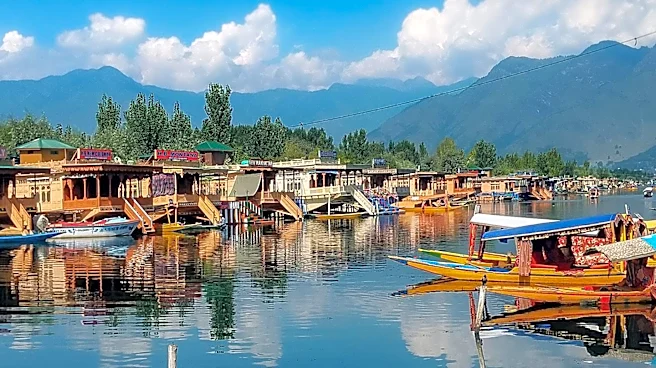
The number of houseboats in Kashmir has seen a substantial decline, dropping from approximately 3,000 around the year 2000 to between 750 and 900 currently. This reduction is attributed to a series of regulatory decisions and external factors. The history
of these houseboats dates back to the 1880s when British visitors, prohibited from owning land under the Dogra Maharajas, began residing on the water. Early houseboats evolved from 'doongas,' long flat boats used by the Hanji families. Key regulatory actions include a 1978 state cabinet decision that capped houseboat numbers and halted new construction, followed by a 1988 government ban on repairs and renovations due to pollution concerns. More recently, a 2010 J&K High Court order further restricted construction around Dal Lake, including new houseboats. Fires, a prolonged tourism downturn in the 1990s, and the high cost of deodar wood, used for construction, have also contributed to the decrease. While some boats have recently received permission for repairs, a sunken houseboat is rarely replaced, highlighting the ongoing challenges faced by this traditional industry.
Why It's Important?
The decline in Kashmir's houseboat population signifies a significant cultural and economic shift for the region. These houseboats are not merely accommodations but represent a unique historical adaptation to land ownership restrictions and a distinctive aspect of Kashmiri heritage. Economically, the reduction impacts the local tourism sector, which relies on these iconic floating hotels to attract visitors. The associated industries, such as traditional carpentry specializing in deodar and walnut wood, and the Hanji boat-making community, also face challenges as demand for new construction and extensive repairs diminishes. The regulatory environment, initially aimed at environmental protection and urban planning, has inadvertently contributed to the erosion of a traditional livelihood and a key tourist attraction. The loss of these houseboats could lead to a decrease in unique tourism offerings, potentially affecting the region's appeal to international and domestic travelers seeking an authentic Kashmiri experience. The situation underscores the delicate balance between environmental conservation, cultural preservation, and economic sustainability in a region heavily dependent on tourism.
What's Next?
The future of Kashmir's houseboats remains uncertain, with ongoing challenges in balancing preservation and regulation. While some existing boats have recently been granted permission for repairs, the overarching bans on new construction and significant renovations continue to limit the industry's ability to regenerate. Stakeholders, including houseboat owners, local government bodies, and environmental groups, will likely need to engage in further dialogue to find sustainable solutions. Potential next steps could involve exploring new policy frameworks that allow for controlled, environmentally conscious development or renovation, possibly incorporating modern eco-friendly materials and practices. Efforts to promote and market the remaining houseboats as heritage accommodations could also be intensified to ensure their economic viability. Additionally, there might be a push for government subsidies or support programs to help owners maintain and restore their vessels, preserving both the cultural heritage and the livelihoods associated with them. The long-term survival of this unique aspect of Kashmiri culture will depend on collaborative strategies that address both environmental concerns and economic realities.
Beyond the Headlines
Beyond the immediate concerns of declining numbers and regulatory hurdles, the situation of Kashmir's houseboats reflects broader themes of cultural heritage preservation in the face of modernization and environmental pressures. The houseboats, born out of a historical land law, symbolize human ingenuity in adapting to constraints. Their current plight raises questions about the value placed on traditional crafts and lifestyles in contemporary society. The intricate deodar and walnut wood carvings, and the unique khatamband ceilings, represent a rich artistic tradition that is at risk of fading as the number of houseboats dwindles. The ethical implications of environmental regulations that inadvertently threaten cultural heritage are also pertinent. While protecting the lakes from pollution is crucial, the method of implementation has had a profound impact on a living tradition. This scenario highlights the need for integrated policies that consider the socio-cultural and economic dimensions alongside environmental objectives, ensuring that conservation efforts do not inadvertently lead to the loss of unique cultural assets. The story of Kashmir's houseboats serves as a poignant example of the complex interplay between history, culture, economy, and environment.