
What's Happening?
Crystal Bridges Museum of American Art has opened the Ozark Discovery Canopy, an all-ages play area located between its Campus Parking Plaza and the museum in Bentonville, Arkansas. The opening, celebrated
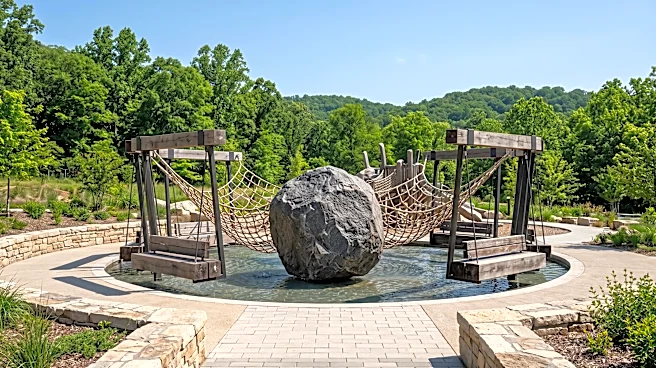
by members of the Walton family, introduces a new attraction on the 134-acre Crystal Bridges Campus. The Ozark Discovery Canopy was developed in collaboration with the Scott Family Amazeum in Bentonville and received funding from several philanthropic organizations, including the Walton Family Foundation, Alice L. Walton Foundation, Kroenke Family Foundation, and the McMillon family. Rod Bigelow, executive director of Crystal Bridges, stated that the canopy aims to offer meaningful experiences that combine art, nature, learning, and connection for families and visitors. The new play area features a flowing water feature, a large rotating boulder, oversized hanging benches, a family-sized slide, climbing nets, and hands-on experiences like a fog room and whispering dishes. It also integrates art installations, such as Tom Otterness’s 'Large Bear' and Wendell Castle’s 'Wandering Mountain.'
Why It's Important?
The opening of the Ozark Discovery Canopy at Crystal Bridges Museum of American Art signifies a significant enhancement to cultural and recreational offerings in Bentonville, Arkansas. This initiative underscores the growing trend of museums expanding their appeal beyond traditional art viewing to include interactive, nature-based experiences for all ages. The collaboration between Crystal Bridges and the Scott Family Amazeum, along with substantial funding from prominent philanthropic foundations like the Walton Family Foundation and Kroenke Family Foundation, highlights the critical role of private philanthropy in enriching public spaces and educational opportunities. By integrating art, nature, and play, the canopy aims to foster a deeper connection between visitors and the Ozarks' natural beauty, promoting holistic development and engagement. This development not only boosts local tourism and community well-being but also reinforces Bentonville's reputation as a hub for arts, culture, and family-friendly attractions, potentially drawing visitors from across the U.S. and contributing to regional economic growth.
What's Next?
The Ozark Discovery Canopy is now open daily from dawn to dusk, providing immediate access for visitors. Crystal Bridges Museum of American Art, having recently opened a 114,000-square-foot expansion earlier this year, is likely to continue its growth and development, with the canopy serving as a new focal point for family engagement. The success of this all-ages play area may influence future programming and expansion strategies for the museum, potentially leading to more interactive and outdoor-oriented exhibits. The ongoing collaboration with organizations like the Scott Family Amazeum suggests a continued partnership in creating innovative educational and recreational experiences. The philanthropic foundations involved, including the Walton Family Foundation and Kroenke Family Foundation, are expected to maintain their support for cultural and community initiatives in the region, potentially funding similar projects that blend art, nature, and learning. The integration of art installations within the canopy also indicates a continued effort to make art accessible and engaging in unconventional settings.
Beyond the Headlines
The Ozark Discovery Canopy represents a broader philosophical shift in how cultural institutions engage with their audiences, moving towards more experiential and inclusive models. By creating a space where art, nature, and play converge, Crystal Bridges is challenging traditional museum paradigms and fostering a more dynamic relationship between visitors and their environment. This initiative reflects a recognition that learning and appreciation can occur outside conventional gallery settings, particularly for younger audiences. The significant philanthropic backing from families like the Waltons and Kroenkes also highlights a commitment to community development that extends beyond economic investment to cultural enrichment and quality of life. This trend of integrating natural landscapes with artistic and educational elements could inspire other institutions to rethink their public spaces, promoting a more holistic approach to cultural engagement and fostering a deeper connection to local ecosystems and artistic expression across the U.S.