
What's Happening?
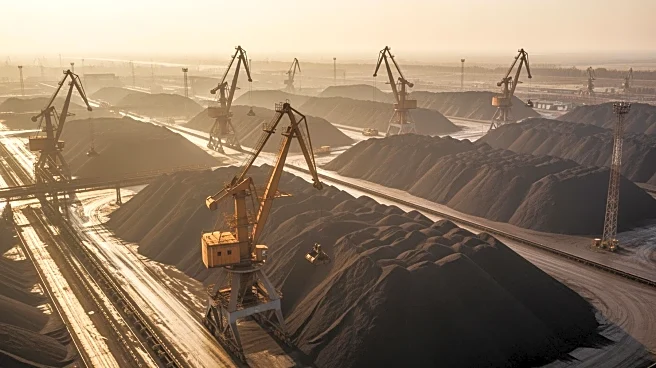
China Mineral Resources Group Co. (CMRG), a state-backed entity, is proposing new measures to curb the hoarding of iron ore at ports. This initiative aims to reduce the pricing power of foreign miners
and traders, such as BHP Group and Vale. The proposal suggests increasing storage costs at import terminals, making it more challenging for these companies to hold iron ore for extended periods. This move is part of CMRG's broader strategy to exert greater control over the iron ore market, which China dominates as the largest global buyer. The proposal includes offering up to 30 days of free storage, after which fees would incrementally rise, reaching a cap after 180 days. While some Chinese steel mills and traders linked to CMRG may be exempt, they are also encouraged to lower their port inventories. The plan has been communicated to certain traders, although no official announcement has been made by Beijing.
Why It's Important?
This development is significant as it highlights China's efforts to gain more control over the iron ore market, which has been largely influenced by major global miners. By implementing these measures, China aims to stabilize prices and reduce costs for its steelmakers, thereby strengthening its negotiating position. The proposed changes could impact the profitability and operational strategies of foreign mining companies, potentially leading to shifts in global iron ore trade dynamics. Additionally, this move underscores China's increasing assertiveness in regulating its commodity markets to protect domestic interests.
What's Next?
If implemented, the new port rules could lead to a restructuring of iron ore supply chains, with foreign miners needing to adapt to the increased costs and logistical challenges. This may prompt negotiations between CMRG and international mining companies to establish new terms for iron ore supply. The proposal's impact on iron ore futures and the broader commodity market will also be closely monitored. Stakeholders, including global miners and traders, may seek to engage with Chinese authorities to discuss potential adjustments or exemptions to the proposed rules.
Beyond the Headlines
The proposed port rules reflect a broader trend of resource nationalism, where countries seek to exert greater control over their natural resources. This could lead to increased tensions between China and major iron ore exporters, potentially affecting diplomatic and trade relations. The move also raises questions about market transparency and the role of state-backed entities in influencing global commodity prices. As China continues to assert its influence, other countries may adopt similar strategies to protect their economic interests, potentially leading to a more fragmented global market.