
What's Happening?
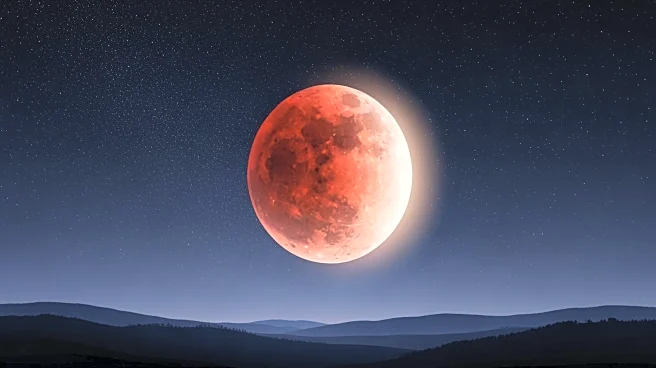
A rare celestial event known as a planetary parade is set to occur at the end of February, where six planets will align in the night sky. According to NASA, this phenomenon happens when multiple planets appear to line up on one side of the sun. While
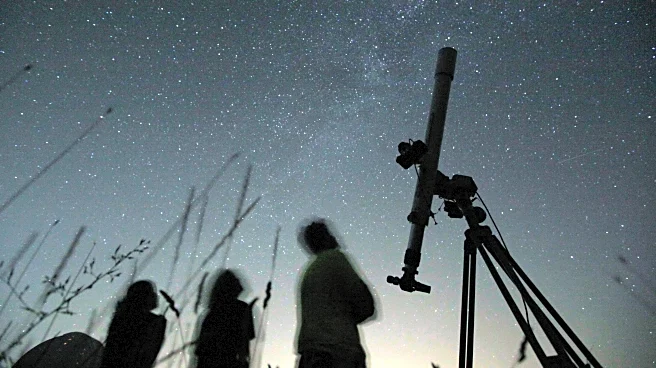
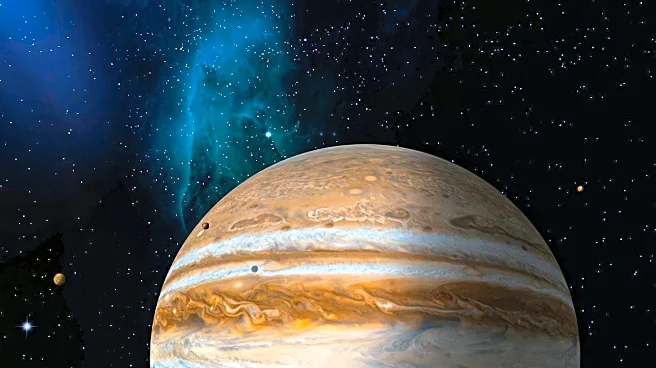
such alignments are not perfectly straight, they are close enough to be visible from Earth. On Saturday, Mercury, Venus, Jupiter, and Saturn will be visible to the naked eye, provided the skies are clear. Uranus and Neptune will require binoculars or telescopes for viewing. The optimal time for viewing is about an hour after sunset, looking towards the western sky. This event offers a unique opportunity for sky gazers to witness a spectacle that connects them with ancient astronomers who studied the universe by observing the stars and planets.
Why It's Important?
The planetary parade is significant as it provides a rare opportunity for both amateur and professional astronomers to observe multiple planets simultaneously. Such events are infrequent, with lineups of four or five planets visible to the naked eye occurring only every few years. This alignment not only offers a visual treat but also serves as a reminder of the vastness and complexity of our solar system. For educational institutions and science enthusiasts, it presents a chance to engage the public in astronomy and inspire interest in space exploration. The event also highlights the advancements in astronomical tools and techniques that allow for better observation and understanding of celestial phenomena.
What's Next?
Following the planetary parade, Mercury will eventually dip below the horizon, reducing the number of visible planets. However, at least one bright planet remains visible on most nights, according to NASA. This ongoing visibility of planets continues to offer opportunities for observation and study. As interest in space and astronomy grows, events like this may lead to increased public engagement and educational initiatives. Institutions may organize viewing events or educational programs to capitalize on the public's interest in such celestial occurrences.
Beyond the Headlines
The planetary parade also underscores the cultural and historical significance of astronomy. Throughout history, humans have looked to the skies for navigation, timekeeping, and understanding the universe. This event serves as a bridge between modern scientific inquiry and ancient practices of stargazing. It also highlights the importance of preserving dark skies, free from light pollution, to ensure that such natural spectacles can be enjoyed by future generations. The event may also spark discussions on the impact of space exploration and the role of technology in expanding our knowledge of the cosmos.