




What's Happening?
Researchers have uncovered that a significant volcanic event in Earth's history not only created a massive underwater plateau but also altered the structure and chemistry of the oceanic plate beneath it. Led by Lecturer Azusa Shito of Okayama University
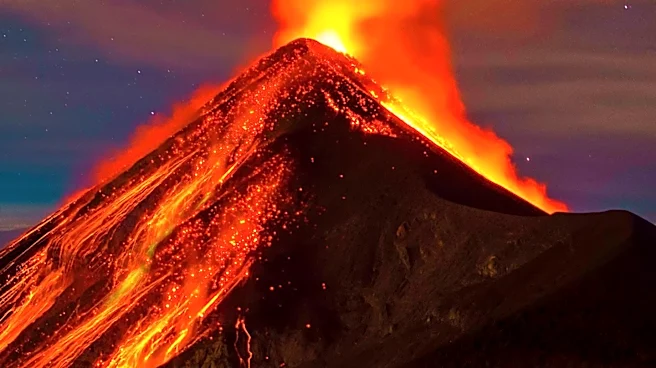
of Science, the team used seismic waves to study the deep structure beneath the Ontong Java Plateau. Their findings, published in Geophysical Research Letters, reveal that large volumes of magma penetrated the existing plate, forming networks of vertical intrusions and chemically transforming the surrounding rock. The Ontong Java Plateau, located beneath the western Pacific Ocean, is the world's largest oceanic plateau, formed approximately 110-120 million years ago. This event is considered the largest volcanic outpouring in Earth's history, potentially disrupting the global environment by altering ocean chemistry, climate, and oxygen levels in seawater.
Why It's Important?
The discovery highlights the profound impact that massive volcanic events can have on Earth's geological and environmental systems. By altering the structure and chemistry of oceanic plates, such events can influence global climate patterns and contribute to mass extinctions. The research provides insights into how oceanic plates develop and how large volcanic provinces reshape Earth's interior. Understanding these processes is crucial for predicting future geological changes and their potential effects on the environment. The study also underscores the importance of seismic research in uncovering hidden geological structures and processes that have long-term implications for Earth's climate and ecosystems.