

What's Happening?
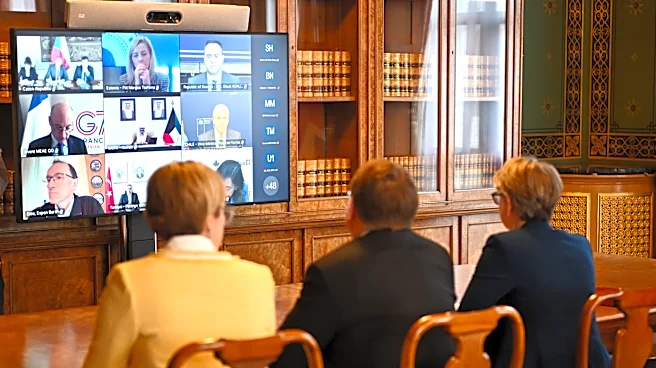
A crisis meeting was convened by the UK involving representatives from over 40 countries to discuss the ongoing blockade of the Strait of Hormuz by Iran. The British Foreign Office announced that the meeting focused on potential measures to increase pressure
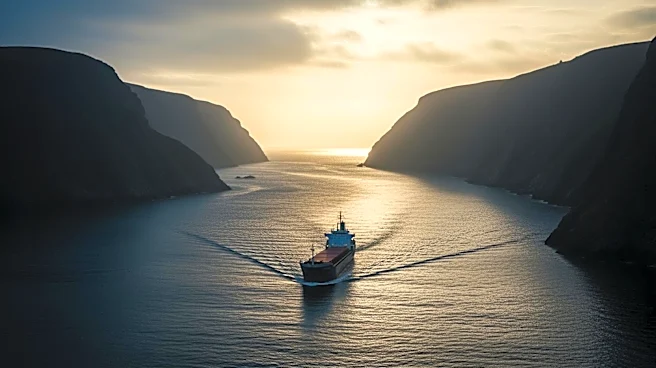
on Iran, including economic and political sanctions. The Strait of Hormuz is a critical passage for global trade, and its blockage has significant economic implications. The International Maritime Organization (IMO) is also involved, working on evacuation plans for stranded ships and seafarers. The meeting highlighted the determination of participating countries to reopen the strait, although no concrete steps have been taken yet.
Why It's Important?
The blockade of the Strait of Hormuz by Iran has substantial implications for the global economy, as it is a vital route for oil and gas shipments. The disruption affects energy markets and could lead to increased prices and economic instability. The crisis underscores the geopolitical tensions in the region, particularly following attacks by the US and Israel on Iran. The situation has prompted international concern, with countries seeking to ensure the security and accessibility of this crucial maritime corridor. The potential for further sanctions could escalate tensions, impacting international relations and trade.
What's Next?
A meeting of military planners is scheduled to take place in Northwood, north of London, next week. This meeting will explore feasible options to ensure the security and accessibility of the Strait of Hormuz for shipping. The outcome of these discussions could lead to coordinated international efforts to address the blockade. The involvement of military planners suggests that strategic and possibly military options are being considered to resolve the situation. The international community will be closely monitoring these developments, as any escalation could have far-reaching consequences.