
What's Happening?
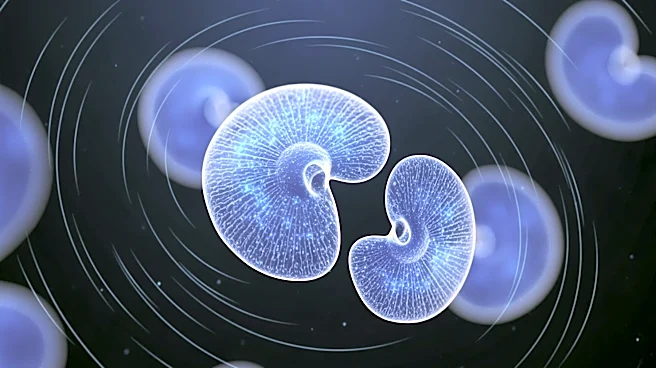
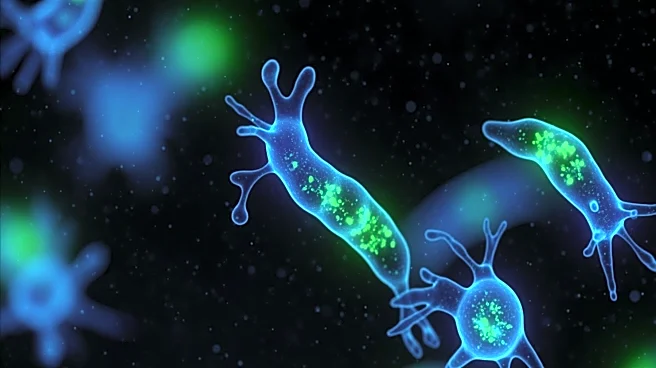
Scientists at the USC Dornsife College of Letters, Arts and Sciences have developed a new framework to better understand the role of marine microbes in the global carbon cycle. The study, published in Science Advances,
identifies eight 'metabolic niches' that categorize marine microbes based on their nutrient acquisition strategies. This approach simplifies the complexity of microbial communities, which are crucial in regulating Earth's climate by breaking down carbon-containing organic matter. The research used genetic data and machine learning to group microbes into clusters, revealing patterns in how they thrive in different ocean environments. This framework aims to improve climate models by incorporating microbial activity, which is often overlooked due to its complexity.
Why It's Important?
The study provides a significant advancement in climate science by offering a method to integrate microbial processes into climate models. Understanding how marine microbes contribute to the carbon cycle is essential for predicting the ocean's response to climate change. By simplifying microbial diversity into functional groups, the research enables more accurate modeling of carbon storage and release in the ocean. This could lead to better predictions of climate dynamics and inform strategies for mitigating climate change impacts. The findings underscore the importance of microbial life in global ecological processes and highlight the need for continued research in this area.
Beyond the Headlines
The research also points to the potential for future studies to refine and expand the framework by incorporating more detailed genomic data and laboratory experiments. This could enhance the understanding of microbial diversity and its ecological roles. Additionally, the study emphasizes the interconnectedness of microscopic processes and global climate dynamics, suggesting that even small-scale biological activities can have significant impacts on Earth's climate. The work highlights the importance of interdisciplinary approaches in addressing complex environmental challenges.