





What's Happening?
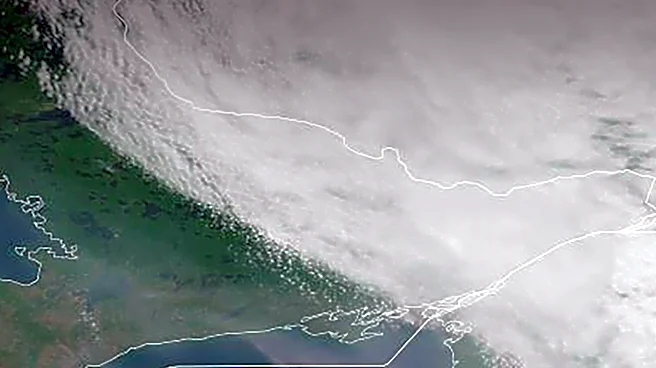
In 2023, Canada experienced an unprecedented wildfire season, with over 18 million hectares burned. The smoke from these massive wildfires spread across a wide area, causing substantial air pollution in numerous U.S. cities. This deterioration in air quality
led to a significant increase in hospital admissions and emergency department visits, particularly among patients with respiratory diseases like asthma. For instance, in June 2023, New York City was ranked as having the worst air pollution worldwide due to smoke from Quebec wildfires, temporarily surpassing traditionally polluted metropolitan areas. The particulate matter, specifically PM2.5, from wildfire smoke is identified as particularly dangerous, capable of penetrating the lungs and entering the bloodstream, exacerbating existing respiratory, cardiovascular, and metabolic conditions.
Why It's Important?
The widespread health impacts in U.S. cities underscore the interconnectedness of environmental events across borders and the vulnerability of urban populations to distant natural disasters. The increase in hospitalizations for respiratory conditions highlights a significant public health crisis, placing strain on healthcare systems and potentially leading to long-term health issues for affected individuals. This situation also brings to light the economic costs associated with increased medical care, lost productivity due to illness, and the disruption of daily life, such as the cancellation of outdoor school activities and public events. The event serves as a stark reminder of the broader implications of climate change, as drier conditions are predicted to make large wildfires and associated higher smoke concentrations more common, necessitating proactive measures for air quality management and public health preparedness.
What's Next?
Addressing the consequences of wildfires for human health will require changes in public settings, including schools, government buildings, apartments, and businesses. It is essential to examine and improve ventilation and air filtration systems and deploy air quality sensors to ensure appropriate indoor air quality. Communities and schools should be involved in planning public events, with provisions for canceling outdoor activities when necessary and providing adequate responses for individuals with respiratory diseases. Vulnerable populations, including those with respiratory and cardiovascular disorders, should be prepared to wear masks to minimize the negative impact of inhaling smoke particles and hazardous gases. These measures are crucial given predictions of rising global temperatures and the increased frequency of such incidents.
Beyond the Headlines
The 2023 Canadian wildfires and their impact on U.S. air quality highlight a critical ethical and policy challenge regarding environmental responsibility and cross-border pollution. While individual countries work to reduce air pollution, the transboundary nature of wildfire smoke demonstrates that local efforts are insufficient without international cooperation on climate change mitigation. This event also exposes disparities in preparedness and access to protective measures, potentially affecting lower-income communities and those with pre-existing health conditions more severely. The long-term shifts could include a greater emphasis on climate resilience in urban planning, the development of early warning systems for air quality, and potentially new legal frameworks for addressing the health impacts of cross-border environmental hazards.